Nowhere to Be Found: The Federal Agencies That Lost Their Own Paper Trails
Photo: President (1993-2001 : Clinton). White House Photograph Office. 1/20/1993-1/20/2001, Public domain, via Wikimedia Commons
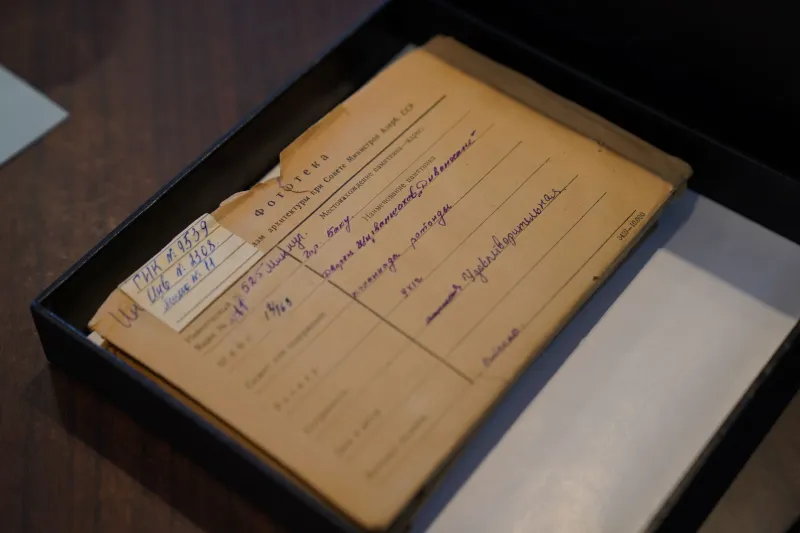
In the reading rooms of the National Archives, researchers occasionally encounter something more unsettling than a difficult document: an empty folder. A label, a file number, a date range — and nothing inside. These hollow containers are among the most consequential artifacts in American archival history, because what they signal is not simply disorganization. They signal erasure, whether accidental or otherwise.
The systematic loss of federal records is not a marginal phenomenon. It is a recurring pattern that cuts across agencies, administrations, and eras, and it raises questions that no finding aid can answer. When a government loses its own paper trail, accountability becomes a matter of inference rather than evidence.
A Pattern, Not an Anomaly
The instinct is to treat missing government files as isolated incidents — a misfiled box here, a flooded storage room there. But archivists and historians who have spent careers navigating federal record systems describe something more structural. Gaps tend to cluster around moments of institutional stress: investigations, scandals, policy reversals, and periods of political transition.
The Federal Bureau of Investigation's counterintelligence files offer one of the most extensively documented cases of archival loss in American history. Portions of the COINTELPRO program records — the bureau's covert domestic surveillance and disruption operations that targeted civil rights organizations, anti-war groups, and political dissidents throughout the 1950s, 1960s, and 1970s — remain either missing, partially destroyed, or classified beyond meaningful public access. What survives was largely recovered through congressional investigations and FOIA litigation, not through the bureau's own preservation protocols. Researchers who have worked with these materials consistently note that the surviving record is incomplete in ways that appear to correspond directly with the most operationally sensitive episodes.
The State Department's correspondence files present a parallel case. Historians examining U.S. diplomatic conduct during multiple Cold War flashpoints have identified unexplained gaps in cable traffic and internal memoranda — absences that cannot be accounted for by routine declassification schedules or known destruction orders. In some instances, documents referenced within surviving cables as attachments or enclosures simply do not exist in the archival record. The paper trail points to documents that were once there and are no longer.
The Legal Framework and Its Limits
Federal records management is governed by the Federal Records Act, which establishes legally binding obligations for agencies to preserve documents that document their policies, decisions, and operations. The National Archives and Records Administration (NARA) is charged with oversight and enforcement. In practice, however, the gap between statutory obligation and institutional behavior has proven extraordinarily difficult to close.
Agencies have wide latitude to designate records as transitory — a classification that permits destruction — and oversight of that designation process has historically been inconsistent. Internal email systems, in particular, have generated recurring crises. Multiple agencies across multiple administrations have faced findings that official communications conducted through government email systems were not properly preserved, sometimes because employees used personal accounts, and sometimes because archival procedures simply were not followed.
NARA itself has acknowledged that it lacks the resources and enforcement authority to compel compliance in real time. By the time an archival gap is identified, the records in question may have been gone for years or decades.
What Absence Reveals
Archivists have long operated with a principle that is counterintuitive to non-specialists: the shape of a gap can be as informative as the documents that surround it. When records are missing in a way that is structurally patterned — concentrated in particular date ranges, particular subject categories, or particular personnel files — that pattern is itself a form of evidence.
Historians examining Department of Justice files related to mid-century civil rights enforcement have noted that investigative records pertaining to specific incidents of racial violence in the Deep South are absent in ways that align with known political pressures on the department during that period. The records that do survive frequently reference investigative activities and witness interviews that are not documented in any file the department has produced. The inference — carefully hedged, but documented — is that some portion of those materials was either never formally archived or was subsequently removed.
Similar patterns have been identified in Environmental Protection Agency records pertaining to early regulatory decisions about industrial chemical exposure, in Department of Defense files related to nuclear testing programs, and in records generated by multiple intelligence agencies during periods of congressional oversight.
The Role of FOIA in Exposing the Gaps
The Freedom of Information Act, enacted in 1966 and significantly amended in subsequent decades, has served as the primary mechanism by which researchers, journalists, and advocacy organizations have mapped the contours of archival loss. FOIA requests do not always produce documents — but even the response to a request is informative. A response indicating that no responsive records exist, particularly when other evidence suggests that records should exist, is itself a data point.
Investigative journalists and academic researchers have developed methodologies for using FOIA responses as negative evidence — building cases about what was lost or withheld by cataloging what is absent against what contemporaneous sources indicate should be present. This approach, sometimes called gap analysis, has become a recognized tool in the historical investigation of federal record-keeping failures.
Accountability Without a Paper Trail
The deeper problem posed by systematic archival loss is not merely historical. When the documentary record of a policy decision, an enforcement action, or an institutional failure is incomplete, the mechanisms of democratic accountability are weakened in proportion. Courts, oversight bodies, and the public all depend on records to evaluate government conduct. A government that cannot — or will not — maintain its own paper trail is a government that has insulated itself, at least partially, from scrutiny.
For historians, the challenge is to work rigorously within the boundaries of what survives while remaining honest about what does not. The empty folder is not nothing. It is evidence of a choice, or a failure, or a system that was never designed to preserve what it most needed to remember. Recovering that history requires acknowledging, with precision and without speculation, exactly what is no longer there to be found.