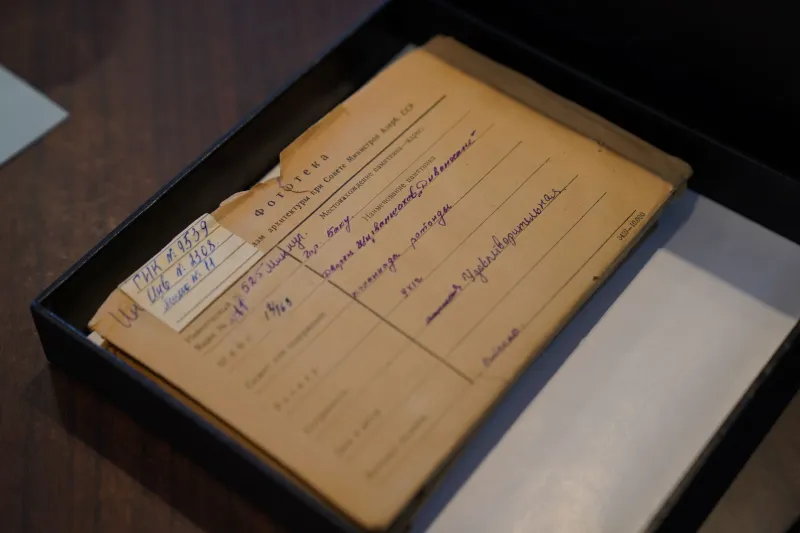
The Rejected and the Forgotten: What Asylum Denial Records Expose About Medical Gatekeeping in Early 20th Century America
The Archive That Admission Never Built
Historians of American medicine have long studied who entered psychiatric institutions—when they arrived, how they were diagnosed, and under what conditions they were eventually discharged or died. The institutional record of admission is, by its nature, relatively well preserved. What has received far less scholarly attention is the complementary archive: the record of who was refused entry, and why.
Rejection files from state hospitals, private sanitariums, and publicly funded asylums in the period roughly spanning 1900 to 1940 constitute an underexamined body of evidence. Where they survive—in state archives, hospital administrative collections, and the records of charitable medical organizations—these documents illuminate the gatekeeping mechanisms that shaped access to mental healthcare along lines of class, ethnicity, nativity, and perceived social utility. The people who appear in rejection files were, in the most literal bureaucratic sense, written out of the system. But the paperwork that excluded them did not disappear.
Institutional Architecture and the Logic of Refusal
To understand what rejection records reveal, it is necessary to understand the institutional context in which they were produced. The early 20th century American psychiatric system was not a unified national structure. It was a fragmented landscape of state-run facilities, private hospitals for paying patients, and charitable institutions supported by philanthropic and religious organizations. Each tier operated according to different financial models and, consequently, different criteria for patient selection.
State hospitals, nominally committed to serving all residents regardless of means, were chronically underfunded and perpetually overcrowded. This structural scarcity made administrative gatekeeping not merely possible but operationally necessary. Superintendents and admissions committees developed informal and, in some cases, formally documented criteria for triage that had little to do with clinical need and a great deal to do with the institution's financial and social calculus.
Private sanitariums, by contrast, were explicit about their selectivity. Their records are often more forthcoming about the reasoning behind rejections precisely because they felt no obligation to justify their decisions in terms of public health. A private institution refusing a patient for inability to pay did not require the same bureaucratic circumlocution as a state hospital denying a county resident ostensibly entitled to public care.
What the Files Contain
The content of surviving rejection records varies considerably by institution and by period, but several categories of documentation recur with notable consistency.
Correspondence between referring physicians or county welfare officers and hospital administrators frequently details the grounds for refusal in frank terms. Letters from state hospital superintendents in the 1910s and 1920s cite overcapacity with regularity, but often in ways that reveal a hierarchy of worthiness beneath the administrative language. Patients described as "chronic," "incurable," or "unlikely to benefit from treatment" appear with disproportionate frequency among the rejected—a clinical framing that, in practice, often mapped onto patients who were elderly, economically unproductive, or members of immigrant communities whose language barriers complicated institutional management.
Admissions committee minutes, where they survive, are among the most revealing documents in this category. These internal records were not written for public consumption, and they reflect the unguarded assessments of administrators making real-time resource allocation decisions. Researchers who have examined committee minutes from northeastern state hospitals have found explicit discussions of a patient's "social worth," family financial resources, and in some cases national origin, alongside clinical considerations.
Application forms themselves carry evidentiary weight. Many institutions required detailed financial disclosures from applicants or their families as a precondition of consideration. The structure of these forms—what information they demanded, what they left unasked—encodes the assumptions institutions made about the relationship between economic status and therapeutic candidacy.
Class and the Geography of Exclusion
The class dimension of psychiatric gatekeeping in this period operated through several distinct mechanisms. The most direct was financial: private institutions required fees that effectively excluded working-class and poor applicants without family resources or charitable sponsorship. But the class dynamics operating within public institutions were more complex and arguably more consequential, given that public hospitals were supposed to function as a universal backstop.
County commitment procedures—the legal and administrative pathway by which individuals without private means were referred to state hospitals—introduced a layer of intermediaries whose judgments shaped who ultimately reached an institutional bed. Probate judges, county welfare officers, and local physicians each exercised discretionary authority that was rarely subject to oversight or appeal. Surviving case files from county commitment proceedings in states including Ohio, Pennsylvania, and New York show that individuals from laboring-class families faced higher evidentiary thresholds for demonstrating the necessity of care, while those whose families had professional or political connections navigated the system with markedly less friction.
The geographic dimension reinforced these class effects. Rural patients faced additional barriers simply by virtue of distance from facilities, compounded by the absence of the social networks and institutional knowledge that urban, middle-class families could mobilize on behalf of a family member in psychiatric crisis.
Ethnicity, Nativity, and the Limits of Public Care
The period 1900 to 1940 coincides with the peak of Southern and Eastern European immigration to the United States and the subsequent imposition of restrictive immigration quotas. Nativist sentiment shaped American institutions across sectors during these decades, and psychiatric facilities were not immune.
Admissions records and rejection files from this period document a distinct pattern of scrutiny applied to patients identified as foreign-born. Some institutions cited federal immigration statutes that rendered certain categories of non-citizens ineligible for public support—a provision that created legal cover for rejections that may have been motivated as much by ethnic bias as by jurisdictional compliance. Correspondence from state hospital administrators to county welfare offices occasionally references a patient's national origin as a complicating factor in admissions decisions in ways that have no clinical analogue.
For Black Americans, the situation was structured by a different but equally exclusionary logic. In the South, segregated facilities meant that Black patients were confined to demonstrably inferior wards or, in many cases, turned away from facilities that lacked designated "colored" capacity. In the North, informal exclusion operated through referral patterns, admissions discretion, and the chronic underfunding of facilities that served Black communities. Rejection records from Northern state hospitals in this period have been examined by medical historians as evidence of the geographic extension of Jim Crow logic into ostensibly non-segregated institutional settings.
Reading Absence as Evidence
The methodological challenge posed by rejection records is the challenge of absence more broadly: how does the historian make evidentiary use of what the archive contains about people who were systematically excluded from the record-generating institutions of their time?
One productive approach has been to read rejection files in conjunction with county welfare records, charitable organization case files, and newspaper accounts of individuals who sought institutional care and did not receive it. When these sources are triangulated, patterns emerge that no single archive would reveal in isolation. The person denied admission to a state hospital in 1922 may reappear in a county poorhouse register, a charitable society case file, or a coroner's inquest record—a scattered documentary trail that, assembled, narrates a life at the margin of institutional legibility.
The archive of rejection is, ultimately, an archive of the system's self-definition: a record of who the institution decided it was not built to serve. For early 20th century American mental healthcare, that definition was drawn along lines of class, ethnicity, race, and economic productivity with a consistency that the official histories of psychiatric medicine have been slow to confront. The files that documented refusal have preserved that confrontation, waiting for researchers willing to read them on their own terms.