What Your Attic Already Knows: A Practical Guide to Authenticating and Preserving Unexpected Historical Finds
The History No Institution Collected
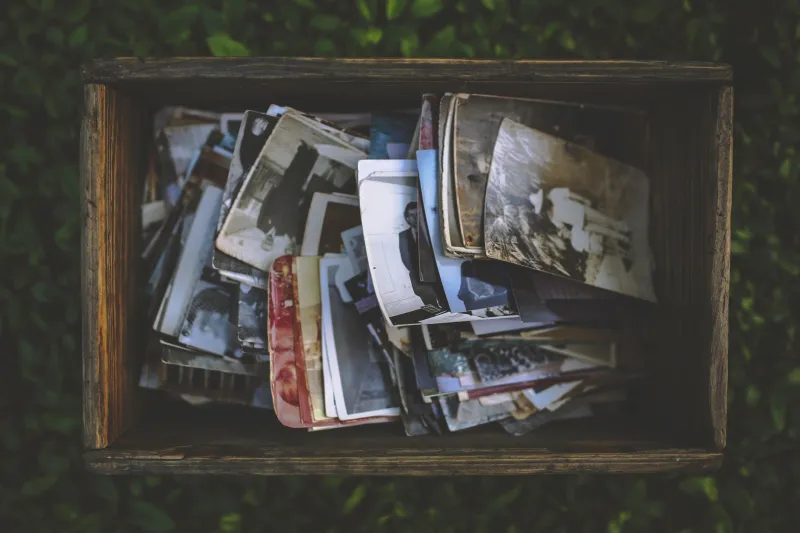
Not every piece of the American past resides in a climate-controlled archive or behind museum glass. A remarkable proportion of it survives in the places institutions never thought to look: the attic of a Midwestern farmhouse, a steamer trunk inherited from a grandmother, a manila envelope tucked between decades-old tax returns. Old photographs, business ledgers, personal diaries, land deeds, and handwritten correspondence represent a distributed archive of lived experience that formal repositories frequently overlooked—or simply never had the reach to collect.
For the amateur historian who stumbles upon such materials, the instinct is often uncertainty. What exactly is this? Does it matter? What should I do with it? These are reasonable questions, and the answers are more accessible than most people assume. With some deliberate effort, even a non-specialist can perform meaningful authentication work, apply sound preservation practices, and connect an individual artifact to the broader historical conversations it belongs in.
Beginning with the Object Itself
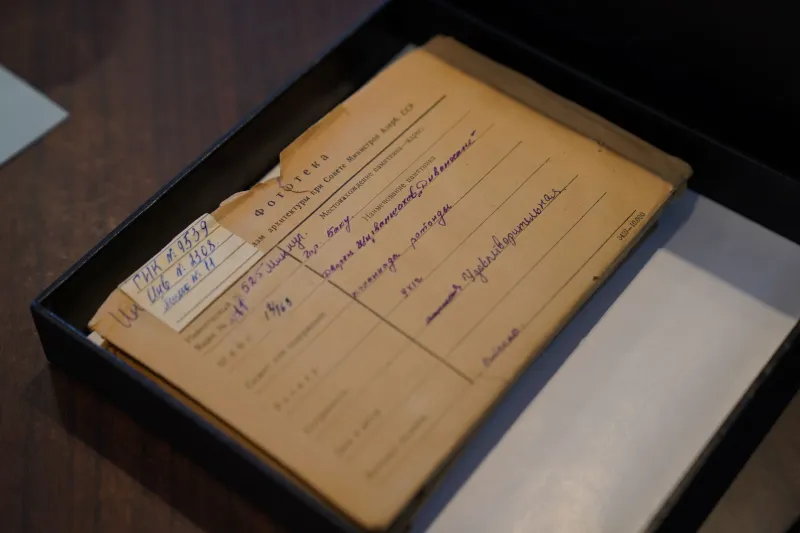
Before reaching for an acid-free sleeve or calling a conservator, take time simply to observe what you have. Authentication begins with careful, unhurried attention to the physical object. For documents and photographs, note the paper stock, the printing or writing medium, and any distinguishing marks such as letterheads, stamps, or watermarks. Handwritten materials should be examined for ink color and consistency—iron gall inks common in the 19th century oxidize to a distinctive brown, while mid-20th-century ballpoint ink has a different sheen and line quality entirely.
For photographs specifically, the format is often the most reliable initial dating tool. Daguerreotypes, produced on silver-coated copper plates, were the dominant format from the late 1830s through the 1850s. Albumen prints on thin paper became widespread after the Civil War. Cabinet cards and cartes de visite were staples of the 1860s through 1890s. By the early 20th century, gelatin silver prints had become standard. Identifying the format narrows the probable date range considerably before any other research is undertaken.
For three-dimensional objects—tools, household items, clothing, military equipment—examine construction methods, materials, and any maker's marks or patent numbers. Patent numbers are particularly valuable: they can be cross-referenced against digitized records from the U.S. Patent and Trademark Office to establish a precise earliest possible manufacture date.
Authentication Without a Laboratory
Professional authentication services exist and are worth pursuing for items of potential significant value, but a great deal of productive verification work can be accomplished through archival research alone. Several resources are available at no cost to the public.
The National Archives and Records Administration (NARA) maintains digitized collections of military records, census data, and federal documents that can help confirm the identities of individuals named in personal correspondence or depicted in photographs. Ancestry.com and FamilySearch offer searchable databases of vital records, city directories, and probate files that can corroborate biographical details. Newspaper archives—many accessible through the Library of Congress's Chronicling America project—allow researchers to verify events, dates, and named individuals against contemporary published accounts.
Local historical societies are often underutilized resources. Staff and volunteer researchers at county or municipal historical societies frequently possess granular knowledge of local families, businesses, and geography that no national database can replicate. A photograph of an unidentified storefront, for instance, may be immediately recognizable to a local historian who has spent years cataloging the same neighborhood.
When documentary authentication reaches its limits, forensic approaches are available through university conservation programs and regional preservation centers. Infrared reflectography, ultraviolet fluorescence examination, and paper fiber analysis can reveal alterations, confirm age ranges, and authenticate signatures without damaging the object.
Preservation Fundamentals
Once an item has been evaluated, proper storage becomes the immediate priority. The enemies of paper-based materials are well established: light, humidity, temperature fluctuation, acid, and biological activity. Each can be meaningfully mitigated with straightforward measures.
Store documents and photographs in acid-free, lignin-free enclosures. Polypropylene or polyester sleeves are appropriate for photographs; acid-free folders and clamshell boxes work well for documents and correspondence. Avoid PVC plastics, rubber bands, and paper clips, all of which cause long-term damage. Ideally, store materials in a space that maintains a relative humidity between 30 and 50 percent and a temperature below 70 degrees Fahrenheit. Basements and attics—the places where most family archives actually live—tend to be the worst possible environments for paper materials. A climate-controlled interior closet or a dedicated archival box in a bedroom is substantially better.
For photographs, separation matters. Images should not be stored face-to-face without interleaving tissue, and albums with magnetic pages—popular from the 1970s through the 1990s—are actively destructive and should be carefully dismantled, with images rehoused in archival sleeves.
Digitization is not a substitute for physical preservation, but it is an invaluable complement. Scanning at a minimum of 600 dots per inch for documents and 1200 dpi for photographs produces files that support detailed examination and can be shared with archives, researchers, or family members. Store digital files in multiple locations, including at least one off-site backup.
Connecting the Object to the Larger Story
Authentication and preservation address the artifact as a physical object. But the deeper work is interpretive: understanding what the item reveals, and to whom that revelation matters.
A bundle of business correspondence from a 1910s dry goods store in rural Georgia is not simply a curiosity. Examined in the context of the era's credit systems, crop lien structures, and racial economic hierarchies, it may illuminate the mechanisms by which small commerce operated in the post-Reconstruction South. A set of photographs from a 1940s defense plant in Detroit may document the integration—or deliberate exclusion—of Black workers in wartime industry. A personal diary from a nurse during the 1918 influenza pandemic may fill gaps in the institutional record that official hospital files never captured.
The practice of situating individual artifacts within larger historical frameworks is what transforms private collecting into genuine historical contribution. Researchers at universities, community archives, and digital history projects are often actively seeking exactly these kinds of materials. Donating high-resolution scans—or in some cases the originals—to a relevant repository ensures that the object enters a searchable, citable archive where it can inform future scholarship.
Organizations such as the Smithsonian Institution's Archives of American Art, regional university special collections, and community-based digital archives like those supported by the Digital Public Library of America all accept donations of primary source materials and can provide guidance on the most appropriate institutional home for a given find.
Becoming a Custodian of the Undocumented Past
The formal archive was never a neutral institution. Decisions about what to collect, fund, and preserve have always reflected the priorities of those with the resources to make them. The result is a historical record with well-documented gaps: the lives of working people, women, immigrants, and communities of color are systematically underrepresented in official repositories.
The materials that survive in private hands often exist precisely because they were never considered significant enough to collect institutionally. That oversight, paradoxically, makes them all the more historically valuable. Every amateur historian who takes the time to authenticate, preserve, and contextualize an unexpected find is performing a form of archival repair—recovering a fragment of the past that the official record was not built to hold.
The history in your attic has been waiting. The tools to read it responsibly are well within reach.