From Attic to Algorithm: How Everyday Americans Are Unlocking Millions of Handwritten Historical Records

For most of recorded American history, the act of historical research was a privileged undertaking. It required institutional affiliation, travel funding, and the time to sit for days — sometimes weeks — in the reading rooms of archives that were, in practice, accessible only to a narrow professional class. The documents existed. The stories they contained existed. But for the vast majority of Americans, both remained effectively out of reach.
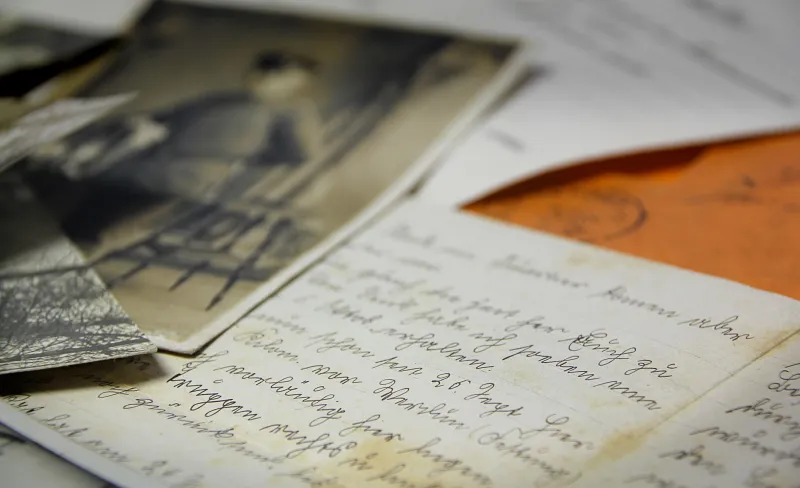
That equation is changing, and the agent of change is not artificial intelligence or a federal digitization mandate. It is, more often than not, a retired schoolteacher in Ohio, a genealogy enthusiast in rural Georgia, or a college student in Portland spending a Saturday afternoon deciphering nineteenth-century handwriting on a free online platform. Crowdsourced transcription — the practice of enlisting volunteer contributors to convert handwritten historical documents into searchable digital text — has quietly become one of the most significant developments in archival research of the past two decades.
The Problem That Digitization Alone Could Not Solve
Institutions have been digitizing historical collections for years. The Library of Congress alone has made more than seventeen million items available online through its digital collections portal. The Smithsonian, the National Archives, state historical societies, and university libraries have collectively placed hundreds of millions of pages of historical material on the internet.
But digitization, by itself, solves only part of the access problem. A high-resolution scan of an 1863 soldier's diary is more accessible than the physical object, certainly — but if the handwriting is difficult to read and the document has not been transcribed, it remains unsearchable. A researcher cannot locate it by keyword. A genealogist cannot find a family name within it. The document is visible, but its contents remain, in a practical sense, locked.
Optical character recognition (OCR) technology — the software process that converts scanned text into machine-readable characters — performs well on printed documents but struggles significantly with historical handwriting, which varies enormously in style, consistency, and legibility. The gap between what machines can reliably read and what trained human eyes can interpret remains wide, and it is precisely this gap that volunteer transcription projects are filling.
The Library of Congress and the Power of the Crowd
The Library of Congress launched its By the People program in 2018, inviting volunteers to transcribe and review digitized documents from its collections. The program has since engaged more than one hundred thousand registered volunteers who have collectively completed transcriptions of more than five million pages of historical material, including suffragist correspondence, Civil War-era records, baseball memorabilia files, and the personal papers of figures ranging from Clara Barton to Walt Whitman.
The scale of this output is difficult to overstate. A single skilled archivist working full-time might transcribe several hundred pages per month under optimal conditions. The By the People volunteer community, working collectively and asynchronously across time zones and schedules, can process comparable volumes in a matter of days. The mathematics of crowdsourcing, applied to archival work, produce results that no institutional budget could replicate through professional labor alone.
What is perhaps equally significant is the quality control mechanism built into the model. Transcriptions submitted by one volunteer are reviewed and verified by another before being accepted into the permanent record. This peer-review structure, simple as it is, has proven remarkably effective at maintaining accuracy across an enormous and diverse contributor base.
Genealogy Platforms and the Personal Stakes of Historical Research
Beyond federally sponsored initiatives, the genealogy community has become a powerful engine of crowdsourced historical transcription. Platforms like FamilySearch — operated by The Church of Jesus Christ of Latter-day Saints and freely accessible to the public — have indexed billions of historical records through a combination of automated processing and volunteer indexing.
For many contributors, the motivation is intensely personal. Transcribing a ship manifest from Ellis Island is not an abstract act of civic participation when your grandmother's name might be somewhere in those pages. Indexing a county death register from 1910 carries different weight when you are searching for a great-great-uncle who disappeared from family memory generations ago.
This personal investment produces a quality of attention that is difficult to replicate in a purely professional context. Volunteers who care about the outcome tend to look more carefully. They are more likely to cross-reference uncertain readings, to flag ambiguous entries, and to note contextual details that a less engaged contributor might overlook. The result is a body of transcribed material that is not only extensive but, in many cases, deeply reliable.
Profiles in Participation: Who Is Doing This Work
The volunteer base for crowdsourced transcription projects is strikingly diverse. Surveys conducted by the By the People program indicate that contributors range in age from teenagers completing school projects to retirees in their eighties. Educational backgrounds vary from graduate researchers to individuals with no formal training in history whatsoever.
What unites them, by most accounts, is a combination of curiosity and a sense of purpose. Many volunteers describe the work as meditative — a focused, quiet activity that connects them to lives lived long before their own. Others emphasize the detective-like satisfaction of working through a difficult passage of faded script and arriving at a legible interpretation. A significant number report that the process of transcribing historical documents has led them to pursue further research, reading, and in some cases formal study in history or archival science.
One frequently cited example is the Smithsonian's Transcription Center, which has processed materials ranging from field notes collected by nineteenth-century naturalists to wartime correspondence held in the National Museum of American History. Volunteers working on these collections have, in several documented cases, identified previously unnoticed details — a reference to an undocumented species observation, a mention of a historical figure not previously associated with a given correspondence network — that subsequently prompted formal academic inquiry.
Accelerating Discovery Beyond Traditional Boundaries
The cumulative effect of these initiatives is a fundamental shift in the pace and geography of historical discovery. When a collection of Civil War diaries is fully transcribed and indexed, every researcher in the country — and, indeed, the world — gains simultaneous access to its contents. A scholar in Chicago, a high school student in rural Mississippi, and an independent researcher in Vermont can all search the same text on the same afternoon. The barriers of physical location, institutional access, and archival processing backlogs dissolve.
This democratization of access carries implications that extend well beyond convenience. It means that the communities most directly connected to a given historical record — descendants of enslaved people, immigrant families, Indigenous communities — are no longer dependent on the interpretive priorities of professional historians to gain access to documentation of their own histories. They can search, find, and engage with primary sources directly.
For a project like Project Past, which is founded on the belief that historical understanding belongs to everyone, this development represents something genuinely significant. The archives were always full of stories. What crowdsourced transcription has done is hand more people the key.