Ink and Intrigue: What Presidential Private Correspondence Tells Us That History Books Never Did
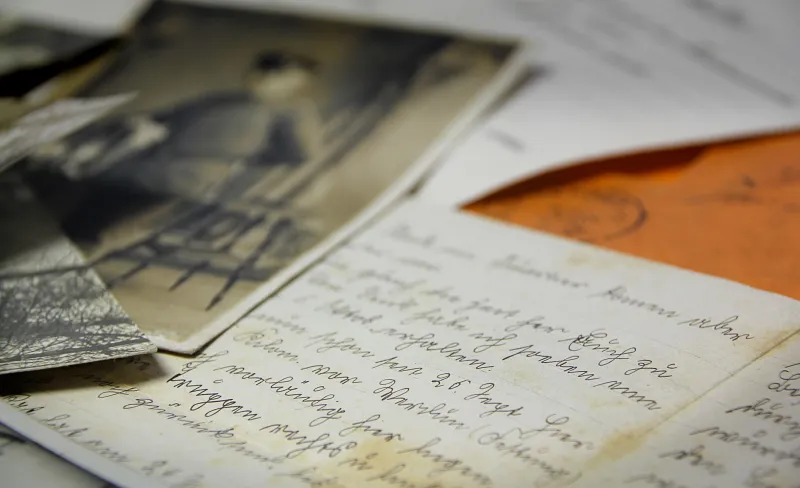
The official record of American history is, by its very nature, curated. Press releases, formal addresses, and published memoirs are crafted with posterity in mind — words chosen as much for the image they project as for the truth they convey. But tucked inside acid-free folders in climate-controlled reading rooms across Washington, D.C., lies a parallel record: one written in haste, in confidence, and without the careful hand of public relations. These are the private letters, unguarded journal entries, and personal telegrams of American presidents — and in many cases, they contradict everything we thought we knew.
The National Archives and Records Administration (NARA) holds hundreds of millions of pages of federal documents, a significant portion of which remain either partially restricted or so voluminous that scholars have only begun to work through them. As declassification schedules advance and digitization efforts expand, historians are surfacing materials that challenge long-held assumptions about pivotal moments in American political history.
Lincoln's Private Doubts and the Weight of Union
Abraham Lincoln has long been cast as a figure of resolute moral conviction — the Great Emancipator who steered the nation through its most devastating internal conflict with unflinching purpose. The private correspondence, however, reveals a man wrestling far more openly with doubt than his public persona ever suggested.
Letters exchanged between Lincoln and his Secretary of State William Seward during the months preceding the Emancipation Proclamation show a president acutely aware of the political risks involved and genuinely uncertain about timing. In one letter, Lincoln expressed concern that premature action could fracture the fragile coalition of border states still nominally loyal to the Union. "The moment must be chosen not by moral urgency alone," he wrote, "but by what the country can bear without breaking."
These communications do not diminish Lincoln's legacy — rather, they deepen it. They reveal a leader who understood that moral clarity and political strategy were not always compatible, and who navigated that tension in private long before history rendered its verdict. For archival researchers, such documents are invaluable precisely because they capture deliberation rather than declaration.
FDR and the Diplomacy That Didn't Make the Papers
Franklin D. Roosevelt's correspondence files represent one of the most expansive presidential paper trails in American history. Yet even within this well-studied archive, scholars continue to encounter material that complicates the standard narrative.
Among the more striking recent findings are a series of letters exchanged between Roosevelt and British Prime Minister Winston Churchill in the early months of 1941 — well before the United States formally entered World War II. These communications, some of which were only fully declassified within the past two decades, reveal a degree of strategic coordination between Washington and London that far exceeded what either government was publicly acknowledging at the time. Roosevelt was, in effect, committing American resources and intelligence cooperation to the Allied cause while simultaneously assuring the American public that the country remained neutral.
Historians have long suspected as much, but the private letters provide documentary evidence of the specific arrangements being discussed — including early conversations about what would eventually become the Lend-Lease program. The gap between Roosevelt's public statements and his private commitments is not merely a historical footnote; it raises enduring questions about the boundaries of executive authority and the extent to which wartime necessity justified a degree of deliberate public misdirection.
JFK, Cuba, and the Letters That Stayed Secret for Decades
Perhaps no chapter of Cold War history has been more exhaustively studied than the Cuban Missile Crisis of October 1962. And yet the archival record continues to yield surprises. Correspondence between President John F. Kennedy and his brother, Attorney General Robert F. Kennedy, released through a combination of NARA declassification and the John F. Kennedy Presidential Library's ongoing processing efforts, offers a window into the internal dynamics of the Executive Committee of the National Security Council (ExComm) that differs meaningfully from the accounts later published by participants.
In particular, several letters and handwritten notes exchanged during the thirteen-day standoff suggest that the president was more willing to consider a negotiated settlement — including a public acknowledgment of the U.S. missile presence in Turkey — than the official ExComm transcripts imply. The private record indicates that what was presented as a firm American position was, in fact, considerably more fluid behind closed doors.
These documents do not recast Kennedy as weak or indecisive. Rather, they illuminate a leader engaged in a kind of dual negotiation: one with the Soviets, and one with the hawks within his own administration. The private correspondence shows him working to create space for diplomacy while maintaining the appearance of resolve — a distinction with profound implications for how we understand crisis management at the highest levels of government.
Why the Private Record Matters
The value of personal correspondence as a historical source lies precisely in its informality. A letter dashed off to a trusted advisor, a note scrawled in the margin of a briefing document, a telegram sent late at night — these are not performances. They are thinking made visible.
For researchers working within the archival tradition, this is the essential argument for preserving and studying such materials. Official records tell us what governments decided; private correspondence tells us how, and why, and at what cost to the individuals involved. The two narratives are rarely identical, and the space between them is where the most meaningful historical work takes place.
Organizations like Project Past exist, in part, because that space deserves sustained attention. The documents are there. The stories they contain are waiting. What remains is the painstaking, essential work of reading them — carefully, critically, and with a willingness to be surprised by what they reveal.
The Ongoing Work of Declassification
It is worth noting that the archival record is never truly complete. NARA processes thousands of declassification requests each year, and presidential libraries continue to open new collections as review timelines are met. For historians, this means that the story of any given administration is always, to some degree, provisional — subject to revision as additional materials become available.
This is not a weakness of historical scholarship. It is its defining strength. Unlike disciplines that deal in fixed data sets, history operates on a record that expands over time, and the willingness to revise established interpretations in light of new evidence is precisely what distinguishes rigorous historical inquiry from mythology.
The lost letters of American presidents are not entirely lost. They are waiting, filed and catalogued, in archives across the country. Every year, more of them become accessible. And every year, the story of who these men were — and what they actually believed — grows a little more complete.