What the Clinical Record Forgot: Archival Research and the Vanishing History of Abandoned Medicine
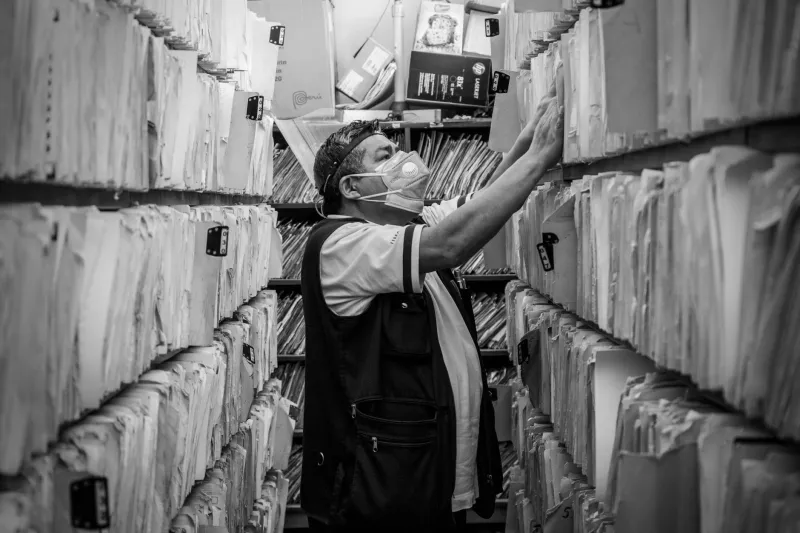
In a temperature-controlled storage room at a mid-sized American research university, a historian of medicine recently opened a banker's box that had not been disturbed in more than four decades. Inside were the handwritten case notes, patient intake forms, and dosage logs from a series of clinical trials conducted in the early 1970s — trials that had never been published, never been cited, and never been formally concluded. The lead investigator had retired. The institution had reorganized. The records had simply persisted, inert and unread, in the archive's lower shelves.
This kind of discovery is becoming less exceptional. As archivists undertake systematic cataloging efforts and digital finding aids make institutional holdings more searchable, researchers across the country are encountering a surprisingly large body of undocumented or under-documented clinical work — experiments, observational studies, and early-phase trials that were conducted in good faith and then, for reasons ranging from the commercially inconvenient to the bureaucratically mundane, were never brought to light.
The Lifecycle of a Forgotten Trial
Understanding why medical records disappear requires understanding how clinical research was conducted and preserved — or not preserved — throughout most of the twentieth century. Before the establishment of mandatory federal trial registration requirements, which did not become fully enforced until the early 2000s, there was no comprehensive mechanism compelling researchers to disclose negative results, inconclusive findings, or abandoned protocols. A trial that failed to attract continued funding, or whose results were commercially unfavorable to a sponsoring institution, could simply stop. The paperwork would be filed, the filing cabinet would be moved, and the institutional memory would fade with the retirements and deaths of those who had been present.
The consequences of this structural gap are still being assessed. Historians and medical researchers who have begun working through pre-registration-era archives describe finding a landscape that is simultaneously rich and disorienting — full of data that was collected carefully and interpreted thoughtfully, but that existed in a kind of documentary limbo, inaccessible to the broader scientific community and therefore invisible to the cumulative process of medical knowledge-building.
Rediscovery as a Form of Historical Correction
Some of the most consequential archival recoveries in recent years have involved treatments that were explored decades ago and then abandoned, only to be independently rediscovered — sometimes at considerable cost in time and research funding — by later investigators working without knowledge of the earlier work.
The pattern is well documented in the history of psychiatric medicine. Researchers examining the institutional archives of several American state hospital systems have identified clinical observations from the mid-twentieth century that anticipated, in sometimes striking detail, pharmacological approaches that would not be formally developed and approved until the 1990s or later. The earlier work was never published. In some cases, it was actively suppressed by administrators who were skeptical of the therapeutic frameworks being explored. In others, it simply fell through the cracks of institutional transition — absorbed into the records of a reorganized department, misfiled during a facility closure, or retained by a private practitioner who died without arranging for its transfer to a public collection.
Similar patterns have emerged in oncology archives. Historians working with the records of mid-century cancer research programs at American university hospitals have documented trials involving compounds that were tested, found to demonstrate measurable activity against certain tumor types, and then discontinued — not because the science was unpromising, but because the compounds were not patentable, or because a sponsoring pharmaceutical company had redirected its investment toward a competing molecule. The scientific data, in many of these cases, was sound. The decision to stop was institutional, not empirical.
The Archival Challenge
Reconstructing the history of abandoned clinical work is not a straightforward task. Medical records from the pre-digital era are often incomplete, inconsistently formatted, and physically deteriorating. Patient privacy considerations — which have grown considerably more stringent since the passage of HIPAA in 1996 — impose legitimate constraints on how historical clinical data can be accessed, shared, and published, even when the patients in question died decades ago.
The institutions that hold these records are also not always enthusiastic about facilitating their examination. Pharmaceutical companies, in particular, have historically resisted requests to open their archival holdings to independent researchers, citing proprietary concerns and the logistical difficulty of reviewing materials that may span multiple corporate mergers and acquisitions. Academic medical centers are generally more cooperative, but their archival resources are frequently underfunded, and the finding aids that would allow researchers to identify relevant collections are often incomplete or nonexistent.
Nevertheless, progress is being made. Several major academic libraries have undertaken collaborative projects with medical historians to systematically catalog and digitize pre-registration-era clinical records. The National Library of Medicine has expanded its historical collections program to include materials from community hospitals and regional research centers that would not previously have been considered significant enough to preserve at the federal level. And a growing number of independent researchers, working at the intersection of archival studies and the history of science, have begun developing methodological frameworks for analyzing incomplete or fragmentary clinical records in ways that are historically responsible without overclaiming what the data can support.
What Institutional Memory Costs Us
The broader significance of this archival work extends beyond any individual treatment or compound. What the recovery of forgotten clinical records demonstrates, above all, is that the history of medicine is not simply a story of linear progress — of knowledge accumulating steadily toward better outcomes. It is also a story of interruption, of institutional forgetting, and of the ways in which decisions made for reasons having nothing to do with science can shape what the scientific community knows and does not know.
For historians, this is a familiar observation. The archive has never been a neutral repository; it has always reflected the priorities, resources, and power structures of the institutions that created and maintained it. What is distinctive about the history of clinical medicine is the directness of the consequences. When a political archive is incomplete, historians lose access to a fuller understanding of the past. When a medical archive is incomplete, patients may lose access to treatments that could help them — or spend decades and billions of dollars rediscovering knowledge that was already, somewhere, written down.
The researchers who are now working through those banker's boxes and filing cabinets are engaged in something more than historical recovery. They are making an argument — quiet, methodical, and grounded in primary sources — about what it costs a society to stop paying attention to its own records. The clinical record forgot. The question now is whether we are willing to remember.