Signed, Inspected, and Forgotten: How State Factory Reports Are Restoring Women Workers to Labor History
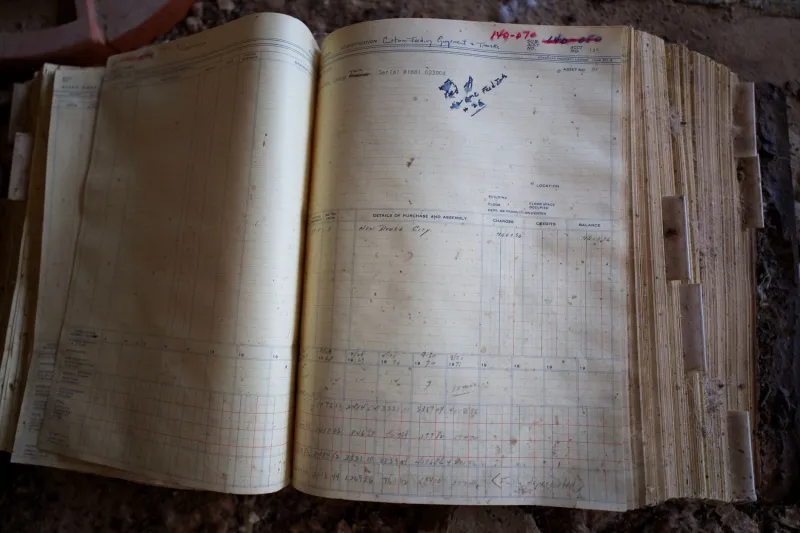
In the basement of the Pennsylvania State Archives in Harrisburg sits a collection of ledger-bound inspection reports stretching back to 1889. The volumes are heavy, their covers warped by decades of humidity, and their pages filled with the cramped handwriting of state-appointed factory inspectors who traveled from mill to mill recording what they found. Names of establishments. Square footage of workrooms. Ventilation conditions. And, critically, the names, ages, wages, and weekly hours of the workers inside — the majority of whom, in many industries, were women.
For most of the twentieth century, these records gathered dust. Labor historians built their field on union archives, congressional testimony, and the published reports of federal agencies — sources that, by their very nature, centered male-dominated trades and male-led organizing drives. Women who labored in garment factories, textile mills, canneries, and cigar-rolling operations appeared in those narratives only intermittently, usually as the subjects of reform campaigns rather than as workers with documented economic lives of their own. The inspection reports told a different story. Nobody, for a long time, thought to read them.
What Inspectors Actually Recorded
State-level factory inspection programs emerged unevenly across the United States during the 1880s and 1890s, driven largely by Progressive Era pressure from labor advocates and settlement house workers. By the early 1900s, states including Illinois, New York, Massachusetts, and Ohio had established inspection bureaus with the authority to enter manufacturing facilities, document conditions, and — in theory — compel compliance with emerging labor statutes.
The resulting paperwork was extraordinarily detailed. Inspectors were required to note not only physical plant conditions but also workforce composition, including the proportion of women and minors employed, the tasks assigned to each group, and the compensation structures in place. In many states, regulations specifically mandated that women's wages and hours be recorded separately, a bureaucratic quirk born of protective labor legislation that, however paternalistic in intent, produced a documentary windfall for researchers working more than a century later.
A single report from an Illinois garment factory in 1907, for instance, might list forty-three women employed in finishing work, their individual weekly wages ranging from three dollars and twenty cents to five dollars and eighty cents, their daily hours, whether they were paid by piece rate or time, and whether the room they occupied met minimum ventilation standards. Cross-referenced across hundreds of facilities and dozens of inspection cycles, these records constitute something that almost no other source provides: a systematic, contemporaneous account of women's industrial labor at the ground level.
Deliberate Erasure or Bureaucratic Neglect?
The question researchers are increasingly pressing is not simply why these records were overlooked, but whether their marginalization was, in some measure, intentional.
Historians working with these collections have noted a consistent pattern: when state inspection bureaus published their annual reports for public consumption, the granular data on women workers was routinely aggregated, summarized, or omitted entirely. The published summaries that made their way into newspapers, legislative debates, and eventually into secondary historical literature presented women's labor as a peripheral concern, a category to be managed rather than a workforce to be understood. The underlying inspection files, by contrast, told a far more complicated story about the scale of women's industrial participation and the degree to which entire industries depended on their underpaid labor.
This divergence between the archival record and the published record is not a trivial distinction. It means that generations of historians working from official publications were, in effect, reading a curated version of the evidence — one shaped by the political priorities of the men who ran state labor bureaus and the industries those bureaus were nominally regulating. The inspection reports themselves survived largely because nobody considered them important enough to destroy, which is perhaps the most damning verdict of all.
Mining the Reports: Methods and Challenges
Reconstructing women's labor history from factory inspection records is painstaking work. The documents are held in dozens of different state archives, organized according to systems that varied by jurisdiction and era, and many have never been digitized. Handwriting quality ranges from meticulous copperplate to nearly illegible scrawl. Inspectors occasionally used inconsistent terminology, recorded the same factory under different names across visits, or omitted data fields without explanation.
Despite these obstacles, a growing cohort of historians, archivists, and digital humanities scholars has begun building structured datasets from these records, using a combination of manual transcription and, increasingly, optical character recognition tools trained on period handwriting. The goal is not simply to catalog individual reports but to aggregate them at a scale that allows for meaningful analysis — tracking wage trends across industries, mapping geographic disparities in enforcement, and identifying which categories of women workers were most systematically underpaid relative to their male counterparts doing comparable work.
Projects at several universities have begun linking inspection data to other period sources, including city directories, census records, and the files of organizations like the National Consumers League, which conducted its own investigations into women's working conditions during the same era. The intersections are illuminating. A woman listed in an 1910 inspection report as earning four dollars a week in a Philadelphia hosiery mill can, in some cases, be traced through the census to a specific household, a specific neighborhood, and a specific set of family circumstances that give her wage figure a human context that the inspection record alone cannot provide.
What the Numbers Reveal
Even preliminary analysis of these records has begun to upend some of the assumptions that shaped twentieth-century labor historiography. Women were not, as many textbook accounts implied, a marginal or transitional presence in American manufacturing. In certain industries — garments, textiles, food processing, tobacco — they constituted the majority of the workforce for decades, and the inspection records make clear that employers structured their operations with full awareness of the wage differential they could extract from female labor.
The records also document, in granular detail, the physical toll of that labor. Inspectors noted overcrowded workrooms, inadequate toilet facilities, the absence of seating for workers required to stand for ten-hour shifts, and the presence of toxic materials handled without protective equipment. These conditions appear in the archival record with a specificity that published reformist literature, which often relied on dramatic anecdote rather than systematic documentation, could not match.
Perhaps most significantly, the inspection reports reveal the limits of protective legislation in practice. Laws mandating maximum hours for women workers, for instance, show up repeatedly in inspection findings as routinely violated, with employers facing minimal consequences. The gap between statutory protection and actual enforcement, documented case by case across hundreds of facilities, is one of the most important stories these records have to tell.
Restoring the Record
The historians working with factory inspection reports are engaged in something that goes beyond conventional archival research. They are, in effect, reversing an editorial decision made more than a century ago — the decision to treat women's industrial labor as secondary data, worth collecting but not worth publishing, worth regulating but not worth remembering.
That reversal carries implications not only for labor history but for how we understand the relationship between government documentation and historical memory. Archives are not neutral repositories. They reflect the priorities of the institutions that created them and the political contexts in which those institutions operated. When researchers return to the raw inspection files rather than the published summaries, they are not simply filling gaps in the record. They are demonstrating that the gaps were, in many cases, constructed — and that the construction was consequential.
The women who appear in these reports — their names, their wages, their hours, the rooms they worked in and the conditions they endured — were always part of the history. The documents were always there. What changed is that someone finally decided they were worth reading.