Checked In, Counted Out: What Hotel Registers and Travel Records Reveal About the Logistics of Civil Rights Organizing
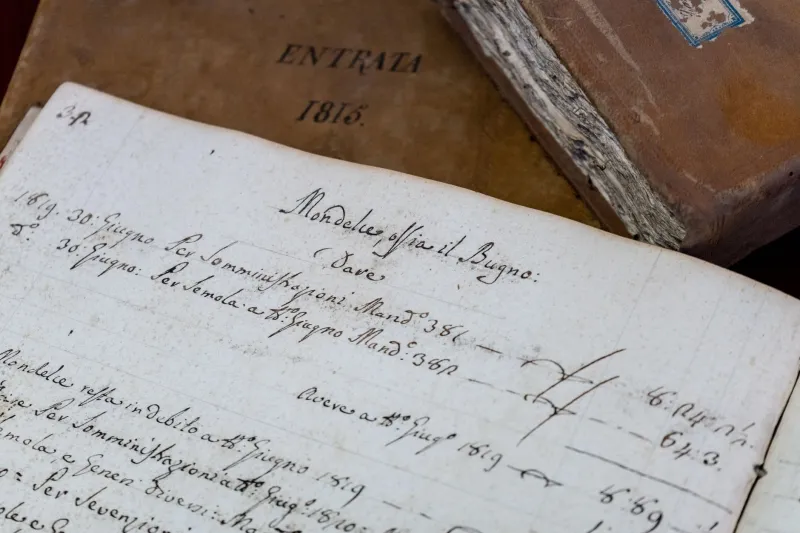
History tends to remember the speeches. It preserves the photographs of marches, the court decisions, the legislation signed into law. What it has been slower to recover are the receipts—the signed hotel registers, the reimbursement ledgers, the bus tickets and mileage logs that quietly documented the movement of thousands of people across a country that was, in many places, openly hostile to their survival.
Those documents are now attracting serious scholarly attention. Archived in university collections, church basements, and regional historical societies across the South and Midwest, travel records from the Civil Rights era are proving to be something that conventional historical sources rarely are: unguarded. A hotel register does not editorialize. A travel voucher does not sanitize. What these documents preserve is the operational reality of one of the most consequential social movements in American history—captured in the handwriting of clerks, treasurers, and organizers who were simply doing their jobs.
The Paper Trail Behind the Movement
Organizing on the scale achieved by groups such as the Southern Christian Leadership Conference (SCLC), the Student Nonviolent Coordinating Committee (SNCC), and the Congress of Racial Equality (CORE) required infrastructure that historians are only beginning to fully reconstruct. Activists did not simply arrive in Birmingham or Selma by instinct. They traveled on coordinated schedules, stayed at pre-arranged locations, received funds from centralized accounts, and submitted expense reports when they returned.
Those expense reports survive. So do the registers of the establishments that housed them.
For Black travelers in the Jim Crow South, finding safe lodging was not a matter of convenience—it was a matter of physical safety. The Negro Motorist Green Book, published annually between 1936 and 1966, provided a curated directory of hotels, boarding houses, and private residences that would accept Black guests without harassment or danger. Cross-referencing Green Book listings against hotel registers from the period has allowed researchers to map with remarkable precision which establishments functioned as nodes in what some historians now describe as a "freedom infrastructure"—a decentralized but coordinated network of safe spaces that made sustained organizing possible.
When a register from a Black-owned boarding house in Montgomery, Alabama, shows the same names appearing across multiple visits during the bus boycott years, that is not coincidence. It is evidence of a logistical system.
Reading Between the Lines of a Guest Ledger
The interpretive value of hotel registers extends well beyond simple documentation of who stayed where. Researchers examining collections held at institutions such as the Amistad Research Center in New Orleans and the Wisconsin Historical Society have noted patterns within these records that reveal the social architecture of Civil Rights organizing in ways that published accounts rarely capture.
Guest logs frequently show clusters of names that correspond to known organizational affiliations, suggesting that activists traveled in coordinated cohorts rather than as isolated individuals. Margin notations—sometimes made by proprietors, sometimes by guests themselves—occasionally identify visitors by organizational role or meeting purpose. In several documented cases, the same establishment appears to have served simultaneously as lodging, meeting space, and communications hub, a function confirmed when cross-referenced against correspondence archives and organizational minutes from the same period.
Transportation records add another dimension. Reimbursement requests filed with organizational treasurers itemize mileage, fuel costs, and tolls in ways that effectively reconstruct travel routes. When these routes are plotted geographically, they reveal the connective tissue of the movement—the roads most frequently traveled, the towns that served as waypoints, and the corridors along which information, personnel, and resources flowed.
Financial Networks and the Economics of Resistance
Perhaps the most underexamined dimension of Civil Rights logistics is its financial architecture. Sustaining full-time organizers, funding travel, and maintaining office operations required money—and that money had to be tracked, allocated, and accounted for.
Treasury records and donor ledgers from organizations including the SCLC and SNCC, now partially digitized and accessible through institutional archives, document the flow of funds from Northern donors and labor unions to Southern field operations with a specificity that published fundraising appeals never could. Individual travel reimbursements, when aggregated, reveal which campaigns received the most organizational investment and which regions were prioritized at particular moments in the movement's history.
These financial records also document something more intimate: the economic vulnerability of individual activists. Reimbursement requests sometimes went unfilled for weeks or months. Expense reports occasionally include handwritten notes explaining why a cheaper lodging option was chosen, or why a planned trip had to be shortened. The movement's moral authority was immense; its operating budget was frequently strained.
Digitization and the Future of Civil Rights Archival Research
The systematic study of these records has accelerated significantly as digitization projects have made previously inaccessible collections available to researchers outside of major metropolitan archives. Institutions including Howard University, Emory University, and the University of Southern Mississippi have undertaken substantial efforts to catalog and digitize Civil Rights-era organizational records, including the administrative documents that have historically received the least scholarly attention.
Digital tools are also enabling new forms of analysis. Network mapping software allows researchers to visualize the relationships between individuals, organizations, and locations that emerge from travel and financial records. Named entity recognition programs can process large volumes of handwritten registers more efficiently than manual transcription alone permits. The result is an emerging body of scholarship that treats the logistical record of the Civil Rights Movement not as supporting documentation but as primary evidence in its own right.
There are, of course, limitations. Many records were deliberately destroyed—by organizations that feared surveillance, by proprietors who worried about retaliation, and in some cases by law enforcement agencies whose own records of monitoring Civil Rights activists remain only partially declassified. The archive is incomplete by design, shaped by decades of institutional hostility and individual caution.
What the Registers Remember
What survives, however, is substantial—and what it tells us complicates the familiar narrative of the Civil Rights Movement as a story of charismatic leadership and spontaneous moral awakening. The hotel registers and travel receipts suggest something at once more ordinary and more impressive: a movement sustained by meticulous planning, careful resource management, and an intricate web of trust relationships that stretched across hundreds of miles and dozens of communities.
The names recorded in those ledgers were not only marching. They were calculating routes, negotiating room rates, submitting expense reports, and building, one carefully documented trip at a time, the infrastructure of a revolution.
For historians committed to recovering the full complexity of that history, the receipts are proving to be essential reading.