Behind Closed Doors: What Surviving Household Employment Records Reveal About America's Most Overlooked Labor System
For most of American labor history, the factory floor served as the primary stage. Strikes, wage disputes, and industrial accidents generated paper trails — inspection reports, union ledgers, congressional testimony — that historians have spent generations mining for evidence of exploitation and resistance. The household, by contrast, produced almost nothing the official record felt compelled to preserve.
That silence was not accidental.
Domestic service — the work of cooking, cleaning, laundering, childcare, and household maintenance performed by hired workers in private residences — employed more women in the United States than any other occupation throughout the 19th century and well into the 20th. At its peak, the sector accounted for roughly one in three employed women in America. Yet because it occurred behind closed doors, in spaces governed by personal relationships rather than industrial contracts, it generated documentation only when individual employers chose to keep it. Most did not.
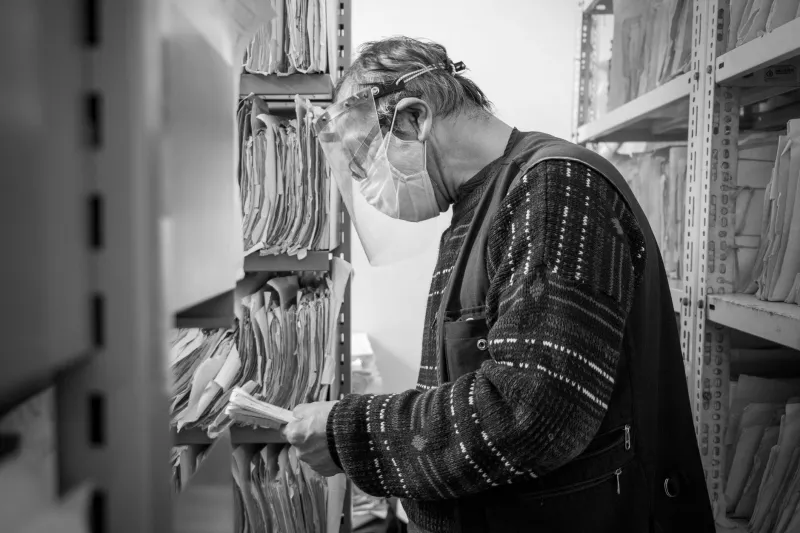
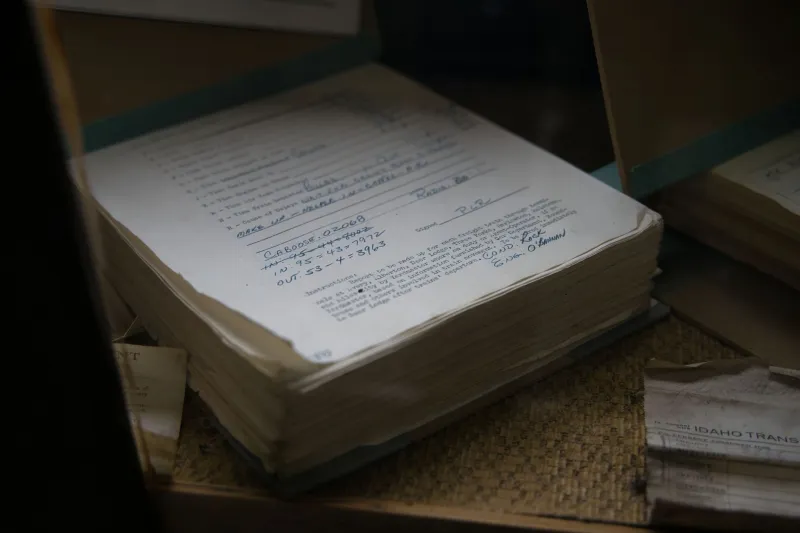
Recent digitization efforts at university libraries, state historical societies, and regional archives have begun to surface the records that did survive: household account books maintained by affluent families in cities like Boston, Philadelphia, and Charleston; servant registry ledgers kept by urban placement agencies; scattered employment contracts written in the cramped, formal language of the era; and personal diaries that occasionally crossed from domestic sentiment into administrative record-keeping. Taken together, these materials are enabling historians to reconstruct the contours of a labor system that was, in many respects, designed to resist documentation.
A Workforce Written Out of the Record
The near-absence of domestic workers from traditional labor archives reflects a deliberate structural reality. Federal labor protections enacted during the New Deal era — including the National Labor Relations Act of 1935 and the Fair Labor Standards Act of 1938 — explicitly excluded domestic workers from their provisions. That exclusion was not incidental. It was the price extracted by Southern lawmakers determined to preserve a workforce that was, in the South especially, overwhelmingly Black and predominantly female.
But exclusion from federal protection had a compounding archival effect. Where industrial employers were required to maintain payroll records, submit to inspections, and document workplace conditions, private households faced no equivalent obligation. The labor that sustained America's middle and upper classes left behind almost no mandatory paper trail. Workers could be hired and dismissed without written agreements, paid in cash without receipts, and housed in conditions that no inspector would ever assess.
What survives, then, is largely the product of individual habit rather than institutional requirement. The household account books of prosperous families — sometimes maintained with meticulous consistency across decades — record wage payments that historians are now cross-referencing against contemporary cost-of-living data. The results are striking. Wages documented in surviving Boston and New York household accounts from the 1880s and 1890s frequently fall 30 to 50 percent below what male workers in comparable unskilled positions were earning at the same time, even accounting for the room and board that employers typically provided and frequently used to justify the disparity.
The Registry System and Its Asymmetries
Urban domestic placement agencies — commonly called intelligence offices or servant registries in the period's own terminology — represent another archival source that digitization is making newly accessible. These agencies, which matched employers with prospective household employees for a fee, maintained ledgers recording worker names, stated occupations, prior placements, and occasionally wages and references.
What these records reveal about the structure of domestic labor markets is instructive, and troubling. Registry ledgers from Chicago and Philadelphia, now held at their respective historical societies and partially digitized, document a tiered market in which workers were categorized not only by skill — cook, laundress, nursemaid, general servant — but by national origin and race. Irish immigrant women dominated certain categories in the mid-19th century; as immigration patterns shifted, Eastern European and Scandinavian workers entered the market in substantial numbers. Black domestic workers, particularly in Northern cities following the Great Migration, were systematically directed toward the lowest-paying placements regardless of experience or references.
The fee structure itself embedded exploitation. Workers typically paid the placement fee, not employers, meaning that women who were dismissed quickly — a common occurrence given the informal nature of domestic employment — could find themselves paying repeatedly for placements that lasted only weeks. Some registry ledgers document the same worker cycling through multiple placements across a single year, each entry representing another fee extracted from wages that were already meager.
Contracts That Bound Without Protecting
The employment contracts that occasionally formalized domestic arrangements represent perhaps the most legally revealing category of surviving records. These documents, which appear more frequently in the antebellum South and in the decades immediately following emancipation, were designed primarily to protect employer interests rather than worker rights.
Contracts recovered from plantation household records and freedmen's bureau files — the latter among the more systematically preserved sources for post-Civil War domestic labor history — frequently required workers to forfeit wages for any days lost to illness, granted employers broad discretionary authority to dismiss workers without cause, and imposed obligations on workers that had no corresponding employer counterpart. Some contracts specified that workers could be required to perform tasks beyond their stated role at the employer's discretion — a provision that effectively made the written job description meaningless.
Freedmen's Bureau records in particular have become a critical archival resource for historians studying the transition from enslaved household labor to nominally free domestic employment in the South. The contracts negotiated through Bureau oversight, imperfect as that oversight was, sometimes represent the only surviving documentation of what individual Black women were paid for household work in the immediate post-war period. That these records exist at all is largely a function of the Bureau's administrative mandate; without it, the transition would be nearly invisible in the archive.
Reading the Gaps
Perhaps the most consequential insight that domestic employment records offer is not what they contain, but what their scarcity communicates about the labor system itself. The deliberate informality of household employment — the handshake arrangements, the cash wages, the absence of written agreements — was not merely a product of the domestic setting's intimacy. It was a structural mechanism that kept workers legally vulnerable and economically isolated.
Without written contracts, workers had no documented basis for wage claims. Without payroll records, they could not demonstrate tenure or calculate unpaid wages. Without formal dismissal procedures, they had no recourse against arbitrary termination. The household's privacy, so often romanticized in period literature as a space of warmth and mutual dependency between employer and servant, functioned in material terms as a legal black box in which exploitation was difficult to document and therefore difficult to contest.
The archival recovery now underway does not restore that documentation retroactively. It cannot give names and wages to the millions of women whose labor sustained American households across two centuries and left no record. What it does, with increasing precision, is establish the dimensions of the system — its wage structures, its racial stratifications, its legal architectures — and in doing so, it insists that domestic service be understood not as a marginal footnote to American labor history, but as one of its central and most deliberately obscured chapters.
For researchers working to recover that history, every surviving account book, every registry ledger, and every crumbling employment contract represents a point of entry into a world that was designed to remain invisible. The project of reconstruction is far from complete. But the records, fragmentary and partial as they are, have already begun to speak.