Wounds That the Paperwork Would Not Name: Military Medical Archives and the Forgotten Health Crisis of WWI Veterans
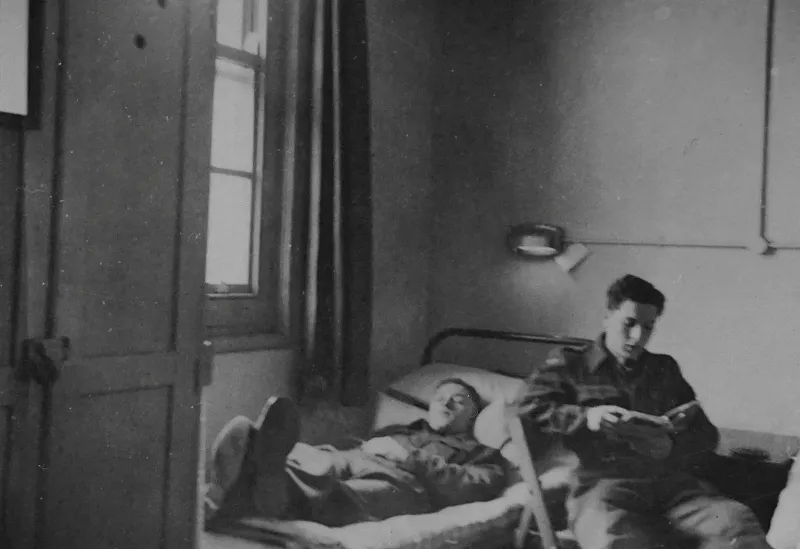
When the last American combat soldier returned from the Western Front in 1919, the United States government faced an accounting problem that had nothing to do with money. Hundreds of thousands of men had come home altered — lungs scarred by mustard gas, nervous systems destabilized by artillery concussion, minds fractured by what contemporaries called "shell shock" and what we now recognize as post-traumatic stress disorder. The question was not simply how to care for them. The question, as the archival record increasingly suggests, was how much of that care the government was willing to formally acknowledge it owed.
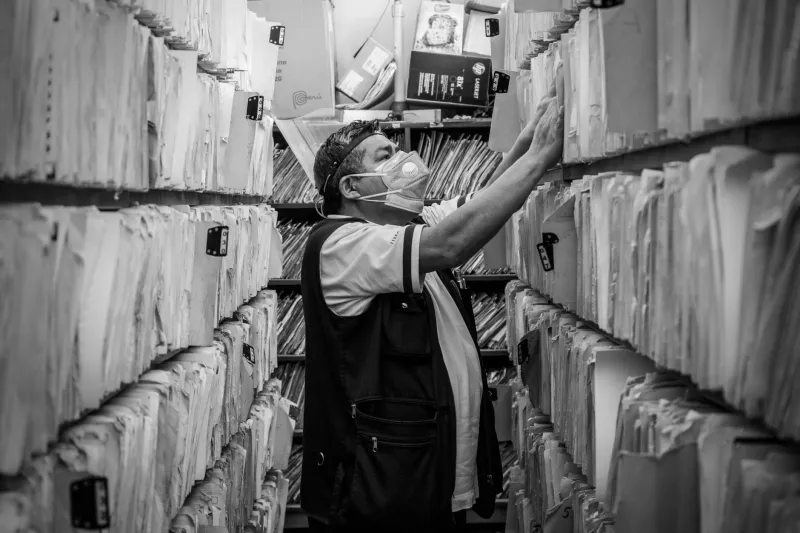
For much of the twentieth century, the answer remained buried in filing cabinets, warehoused in federal facilities, or quietly lost to neglect. Today, through a combination of digitization initiatives led by the National Archives and Records Administration, university library consortia, and volunteer transcription projects, those records are finally becoming legible — and what they reveal is both medically significant and historically damning.
What the Hospital Ledgers Contain
Army base hospital records from the 1917–1919 period are among the most structurally inconsistent documents in the federal archive. Physicians working under battlefield conditions and wartime administrative pressure recorded diagnoses in shorthand, often using terminology that was itself in flux. "Neurasthenia," "effort syndrome," "disordered action of the heart" — these were the clinical euphemisms of an era that lacked both the vocabulary and, in many institutional settings, the professional incentive to document psychological injury with precision.
What researchers are finding, however, is that inconsistency itself tells a story. When the same soldier appears across multiple records — an admission form, a transfer note, a discharge summary — the diagnostic language frequently shifts in ways that are difficult to attribute to clinical reassessment alone. A man admitted with symptoms consistent with gas exposure might be discharged with a notation attributing his condition to "prior constitutional weakness." The effect, whether intentional or systemic, was to sever the evidentiary chain between military service and medical consequence.
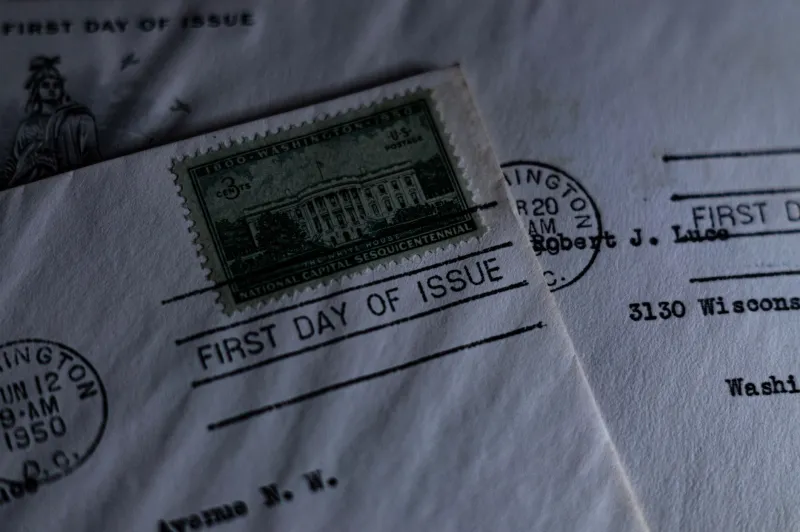
Pension files compound this picture. The Bureau of War Risk Insurance, established in 1914 and later reorganized into the Veterans Bureau in 1921, generated an enormous paper trail of claims, appeals, and denial letters. Archivists at several institutions have begun cross-referencing these files with hospital admission records, and the correlations are striking. Denial letters frequently cited insufficient medical documentation — documentation that, in numerous cases, the Army's own record-keeping apparatus had failed to produce or had produced in a form too ambiguous to satisfy the bureau's evidentiary standards.
The Architecture of Omission
To describe this pattern as a conspiracy would be to overstate the evidence. What the records suggest is something more mundane and, in certain respects, more troubling: a bureaucratic architecture that was structurally incapable of fully documenting the human cost of industrial warfare, and that was not meaningfully reformed once the scale of that failure became apparent.
The Veterans Bureau under Charles Forbes — who was later convicted of fraud and corruption in one of the Harding administration's most notorious scandals — operated under conditions of chronic underfunding and administrative chaos. Hospital construction contracts were mismanaged. Supply chains were corrupt. Medical staff turnover was high. In this environment, thorough record-keeping was aspirational at best. Veterans who sought care at understaffed facilities often found that their visits went unrecorded or were logged with insufficient clinical detail to support future claims.
The consequences were not distributed equally. Rural veterans, those without access to legal counsel, African American soldiers navigating a segregated benefits system, and men whose injuries were psychological rather than physical all faced disproportionate barriers to documentation. The archive reflects these disparities with uncomfortable clarity: claims from Black veterans, in particular, were denied at rates that bear no defensible relationship to the medical evidence contained in the files themselves.
Reading Against the Grain
One of the methodological contributions of recent archival work in this area has been the development of techniques for reading incomplete records against their own silences. Historians trained in what might be called "negative evidence" analysis examine not only what a document states but what it conspicuously omits, how it is formatted relative to comparable records, and where in the bureaucratic sequence it appears to have stalled.
A discharge form that skips the standard section for "service-connected disability" notation, for instance, is not merely incomplete. In context — when compared against the admission record that preceded it and the pension denial that followed — it becomes evidence of a process that was working, however imperfectly, to limit federal liability. The silence is not neutral. It is a form of institutional speech.
This interpretive framework has allowed researchers to construct more accurate estimates of the chronic illness burden carried by WWI veterans than official statistics ever reflected. Studies drawing on digitized pension files suggest that rates of respiratory disease, neurological disorder, and what we would today classify as traumatic brain injury were substantially higher than the Veterans Bureau's published figures acknowledged. The gap between documented and actual morbidity represents, in effect, the quantifiable cost of administrative negligence.
Precedents That Outlasted the War
The significance of this archival work extends well beyond the specific population of WWI veterans. The documentation practices established — and the failures institutionalized — during this period created templates that shaped how the federal government recorded, or declined to record, veteran health outcomes for decades afterward. The underfunded, administratively fragmented approach to veteran medical recordkeeping that characterized the early Veterans Bureau did not disappear with the appointment of a reform-minded director. It calcified into procedure.
Researchers studying Vietnam-era Agent Orange claims, Gulf War syndrome documentation, and the post-9/11 burn pit illness records have identified structural parallels to the WWI pattern that are too consistent to be coincidental. The archive, in this sense, is a longitudinal study in institutional behavior — one that the government itself never commissioned but that the historical record has preserved nonetheless.
The Work That Remains
Digitization has made these records accessible in ways that were unimaginable a generation ago. Keyword searches across thousands of handwritten pages, optical character recognition of faded typescript, and collaborative transcription platforms have dramatically accelerated the pace of discovery. Yet accessibility is not the same as completeness. Significant portions of WWI-era Army medical records were lost in the 1973 fire at the National Personnel Records Center in St. Louis — a disaster that destroyed an estimated sixteen to eighteen million files and that remains one of the most consequential archival losses in American history.
What survived, however, is substantial. And what that surviving record reveals, when read carefully and in aggregate, is a history of veteran suffering that the institutions responsible for documenting it were, at best, poorly equipped to capture and, at worst, motivated to obscure. The men who carried the physical and psychological residue of the Western Front home with them deserved a more honest accounting than the paperwork gave them. The archive, imperfect as it is, may be the closest thing to that accounting we now have.