Committed to Silence: How State Hospital Admission Records Expose the Hidden Architecture of Forced Institutionalization in America
The Archive That Was Never Meant to Be Read
When state legislatures authorized the construction of sprawling psychiatric hospitals across the United States during the mid-nineteenth century, the administrators who ran those institutions generated an extraordinary volume of paperwork. Admission registers, physical examination logs, physician case notes, transfer orders, and discharge summaries accumulated over decades into vast institutional archives that were, for the most part, considered routine administrative debris. Few of the officials who produced these documents imagined that historians would one day read them as evidence of systemic abuse.
That is precisely what a growing number of archival researchers are now doing. Drawing on collections held at state archives, university libraries, and the surviving records of hospitals that have since closed, scholars are reconstructing a history of American psychiatry that differs sharply from the triumphalist narrative of scientific progress that has dominated the field's self-presentation. What the admission records reveal, in aggregate, is a system in which diagnosis frequently functioned as a legal instrument of social control rather than a clinical judgment—and in which the populations most vulnerable to that instrument were women, immigrants, and people of color.
What an Intake Form Actually Recorded
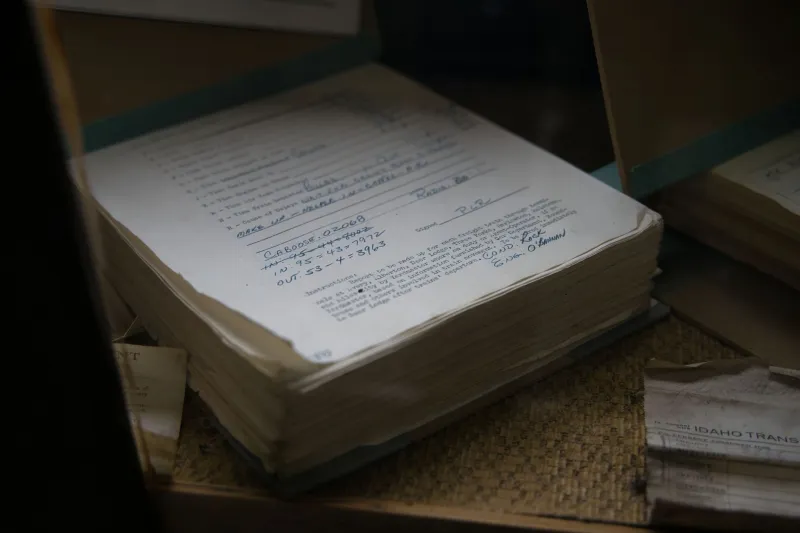
The admission documents themselves are, on their surface, unremarkable objects. A standard intake form from a late nineteenth-century state hospital might record a patient's name, age, place of birth, occupation, marital status, the name of the person who authorized the commitment, and a brief notation of the presenting complaint. It is in this last field that the archive becomes most revealing.
Historians examining collections from institutions in New York, Illinois, and Virginia have catalogued diagnoses that would strike any contemporary clinician as transparently social rather than medical in character. Women were committed for "domestic excitement," "refusal of household duties," and "excessive reading." Immigrant men were frequently assigned diagnoses that referenced their national origin as a contributing factor in their supposed mental deterioration. African American patients in Southern institutions were committed under designations that appeared nowhere in the diagnostic literature applied to white patients, terms that encoded racial assumptions directly into the clinical record.
These notations were not aberrations. Researchers who have quantified admission data across multiple institutions and time periods have found them to be statistically consistent patterns, appearing in sufficient volume and geographic distribution to suggest that they reflected standard practice rather than the idiosyncratic judgments of individual physicians.
The Commitment Process as a Legal Instrument
Equally significant is what the records reveal about the legal mechanisms that placed patients inside these institutions. Prior to the mid-twentieth century, involuntary commitment in most American states required only the signature of a family member or, in some jurisdictions, a single physician. Judicial review was minimal or entirely absent. The admission registers of many hospitals document the speed with which this process could operate: individuals were sometimes committed and transferred to a facility within forty-eight hours of a family member's initial request.
For women, this vulnerability was particularly acute. Archival research into commitment records from the Progressive Era has documented cases in which wives were institutionalized by husbands seeking to dissolve inconvenient marriages, daughters committed by fathers who objected to their professional ambitions or romantic choices, and widows placed in state care by relatives who wished to gain control of inherited property. The admission forms in these cases record the official clinical rationale; the correspondence files that sometimes accompany them—letters between family members, communications with hospital superintendents—record the actual one.
Immigrant communities faced a distinct but related vulnerability. Researchers examining records from port-of-entry hospitals and urban state institutions have found that language barriers frequently resulted in misdiagnoses, as physicians with no fluency in a patient's native language recorded confusion or agitation as evidence of mental disorder. Federal immigration policy during the late nineteenth and early twentieth centuries explicitly authorized the deportation of immigrants deemed "mentally defective," a provision that created institutional incentives to classify foreign-born patients in ways that served administrative rather than therapeutic purposes.
Experimental Treatments and the Problem of Consent
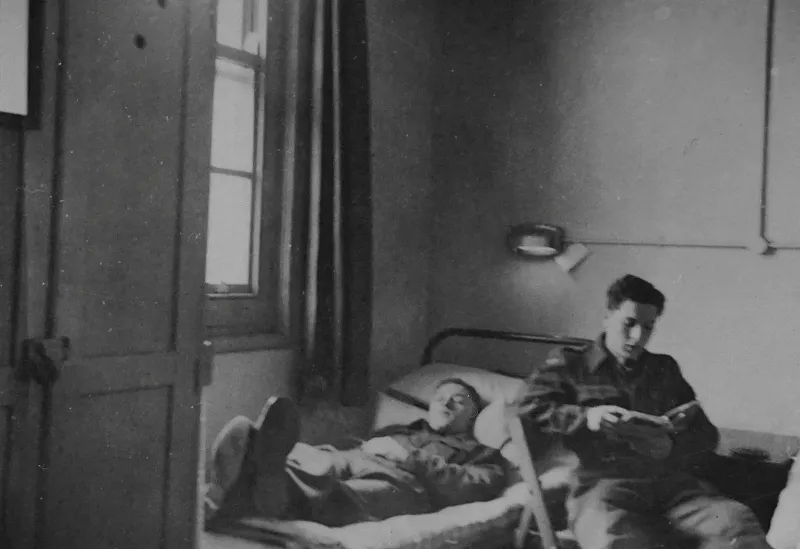
The case note files that accompany admission records introduce a further dimension of the archive's significance. For patients who remained institutionalized over extended periods, these notes document the treatments they received—and the records are, in many instances, a chronicle of procedures that were applied without any mechanism for informed consent.
Hydrotherapy, insulin shock therapy, metrazol convulsive therapy, and, from the 1930s onward, prefrontal lobotomy appear in case files across multiple institutions, often with notations indicating that the patient's family had been informed but that the patient's own views were not solicited or recorded. In some collections, researchers have found evidence that long-term patients were enrolled in research protocols without documentation of any consent process whatsoever.
These records exist in fragmentary form. Many state hospitals destroyed case files after a specified retention period, and the fires, floods, and administrative reorganizations that accompanied hospital closures across the latter half of the twentieth century eliminated additional material. What survives is, by definition, an incomplete record—but its incompleteness is itself historically meaningful. The gaps in the archive map onto the populations and practices that institutions had the least interest in preserving.
Recovering What the Records Tried to Bury
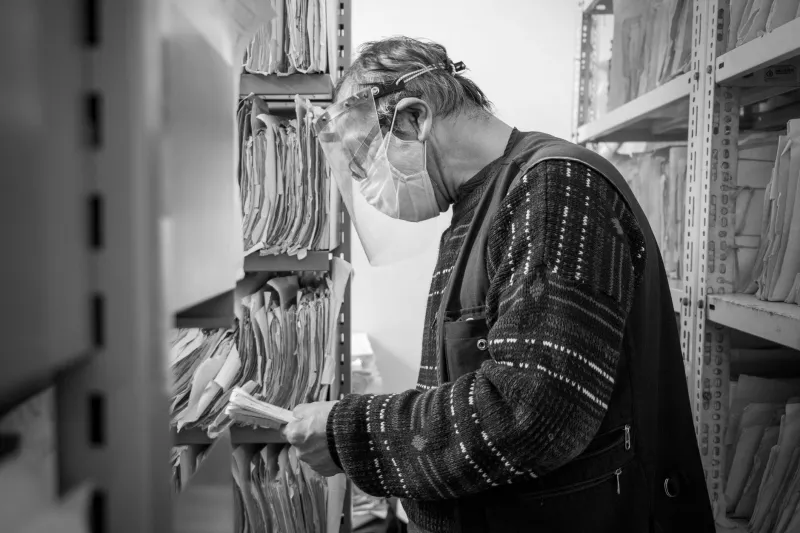
The methodological challenge facing researchers who work with these materials is considerable. Patient names in surviving records are frequently protected under state privacy statutes, even for individuals who died more than a century ago, complicating efforts to link institutional records with census data, immigration files, or vital records that might provide biographical context. Digitization projects have made some collections more accessible, but many hospital archives remain uncatalogued, stored in conditions that accelerate deterioration, and effectively inaccessible to researchers outside the immediate region.
Nevertheless, the work of recovery is advancing. Community organizations representing descendants of former patients, disability rights advocates, and academic historians have collaborated in recent years to press state archives for improved access and preservation funding. Some institutions have supported oral history projects that pair surviving former patients with archival materials, creating composite records that place bureaucratic documentation alongside firsthand testimony.
What emerges from this work is not simply a critique of historical psychiatry, though it is certainly that. It is a demonstration of what archival research can accomplish when it approaches institutional records as evidence of power rather than as neutral administrative documentation. The intake forms that state hospitals generated were never designed to tell the stories of the people they processed. The task that historians have set themselves is to make those forms speak anyway—and to ensure that what they say is finally heard.