Written in the Margins: How Librarians' Private Annotations Became a Secret Archive of Intellectual Resistance

The Archive Within the Archive
Most historical records are created with an audience in mind. Government reports anticipate bureaucratic scrutiny. Correspondence assumes a reader. But the handwritten annotations discovered in the margins of library materials occupy a stranger archival category altogether: they were written, in many cases, precisely because no one was expected to read them.
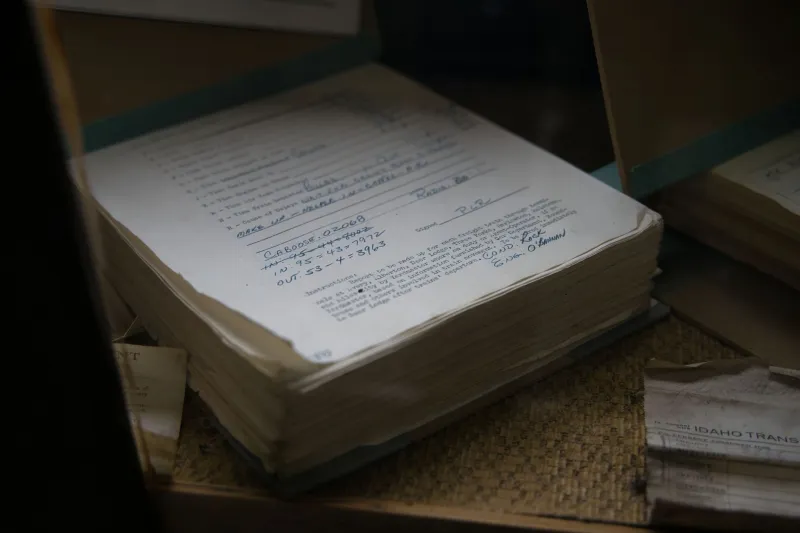
Over the past two decades, archivists working in regional library collections, university special holdings, and municipal records repositories have begun treating these marginal inscriptions not as incidental curiosities but as a coherent body of evidence. What they have found is a fragmented but remarkably consistent record of librarians using the physical space of the book—its white margins, its endpapers, its interior covers—to register dissent, flag manipulation, and document the intellectual pressures bearing down on their institutions at particular historical moments.
The implications extend well beyond bibliography. These annotations constitute, in aggregate, an informal counter-archive: a record of what official channels declined to acknowledge.
Depression-Era Collections and the Problem of Sponsored Content
The archival trail grows especially dense in materials dating from the 1930s. During the Great Depression, a significant volume of reading material distributed to public libraries arrived through channels that were not always transparent. Federal agencies, civic organizations, and ideologically motivated private foundations donated books and pamphlets intended to shape public opinion on economic policy, labor organizing, and the role of government intervention.
Librarians in several major American cities responded by annotating these materials before shelving them. Researchers examining the holdings of Midwestern public libraries have documented penciled notations identifying the sponsoring organizations behind particular texts, flagging statistical claims as contested, or directing readers to contradictory sources held elsewhere in the collection. In one documented case from a Chicago-area branch library, a circulation copy of a pamphlet promoting wage reduction as economic necessity contains six separate marginal corrections citing federal labor statistics—corrections written in a hand later matched, through staff employment records, to the branch's head librarian.
These were not casual reader responses. They were deliberate, informed interventions by professionals who understood that the materials on their shelves were doing ideological work, and who chose to complicate that work through the most available tool: a pencil and the white space beside the printed line.
Cold War Pressures and the Annotated Shelf
The postwar period introduced a different but related set of pressures. The American Library Association's engagement with anti-communist investigations during the late 1940s and 1950s is reasonably well documented in institutional records. What is less well understood is what happened at the branch and departmental level, where individual librarians faced demands—sometimes formal, sometimes informal—to withdraw, restrict, or monitor access to materials deemed politically suspect.
Annotations recovered from this period display a notably different character than their Depression-era counterparts. Where 1930s notes tend toward factual correction and source citation, Cold War-era inscriptions more frequently record institutional pressure itself. Archivists have identified notations that document the date a volume was placed on a restricted shelf, the authority by which the restriction was imposed, and occasionally the librarian's own assessment of the decision's legitimacy. In several instances, these marginal entries constitute the only surviving record that a restriction occurred at all—the formal administrative paperwork having been discarded, lost, or never generated in the first place.
One particularly significant discovery, made during a 2011 survey of a university library's legacy stacks in New England, involved a set of annotated volumes on Soviet economic policy. The marginalia, written across multiple books and clearly in the same hand, traced a running commentary on the library's handling of politically sensitive acquisitions over approximately a four-year period in the early 1950s. The annotator—whose identity has not been publicly confirmed—appeared to be systematically recording which titles were being reviewed, which were being retained, and which were quietly disappearing. The notes function less as literary commentary than as a clandestine institutional log.
Reading the Annotations as Documentary Evidence
The methodological challenges involved in working with this material are considerable. Marginal annotations are, by their nature, decontextualized. They lack the structural markers—dates, signatures, addressees—that make most archival documents interpretable at a glance. Attributing a handwritten note to a specific individual requires cross-referencing staff records, payroll documentation, and in some cases handwriting analysis against signed correspondence held in separate collections.
Nonetheless, archivists have developed increasingly sophisticated frameworks for treating marginalia as primary source material. The key methodological shift involves moving away from the assumption that annotations are supplementary to the texts they inhabit. Instead, researchers now approach them as documents in their own right, with their own rhetorical contexts and evidentiary value.
This reframing has opened productive lines of inquiry. When annotations across multiple volumes in the same collection share a consistent vocabulary, a recurring set of cited sources, or a common set of institutional concerns, they begin to cohere into something recognizable as a perspective—a professional and intellectual position being articulated under constraints that prohibited more direct expression.
What Silence Required
Perhaps the most significant dimension of this archival work involves understanding what the annotations were responding to. In most cases, the librarians who wrote these notes operated within institutions that were themselves under various forms of external pressure. Funding bodies, municipal governments, patriotic organizations, and federal investigators all exerted influence on American public and academic libraries during the twentieth century. Direct professional dissent carried real professional risk.
The margins, in this context, were not merely a convenient surface. They were a protected one. A notation written in pencil on the interior page of a circulating volume existed in a kind of institutional blind spot—visible, in principle, to any reader, but not part of the formal record that supervisors reviewed, investigators examined, or administrators controlled.
This is what makes these annotations historically significant beyond their specific content. They document not only what individual librarians thought but what conditions required thought to be expressed this way—obliquely, physically embedded in the materials themselves, technically deniable, and addressed to no one in particular.
Recovering a Distributed Archive
Efforts to systematically collect and catalog these annotations remain in early stages. No national repository currently exists for library marginalia as a documentary category. Individual institutions hold what they hold, and the survival of any given annotated volume depends heavily on whether it escaped deaccession, digitization projects that strip physical copies from circulation, or the routine replacement of worn materials.
Several regional archival initiatives have begun photographing and transcribing marginal annotations as part of broader preservation surveys, and at least two university library programs have incorporated the study of professional marginalia into their archival history curricula. The work is slow, and the record is uneven.
But what has already been recovered is sufficient to establish the basic historical claim: that American librarians, across multiple periods of political pressure, used the physical architecture of their collections to leave behind evidence of what those pressures felt like from the inside. The margins of restricted books, it turns out, contain their own history—one that official institutional records were structured, whether by design or neglect, to omit.