Speaking the Record Into Existence: How Community Oral History Projects Are Preserving What Official Archives Were Built to Ignore
Traditional institutional archives were never neutral repositories. They reflected the values, priorities, and prejudices of the governments, universities, and corporations that funded them—which meant that entire populations lived and died without leaving a trace in the official record. A new generation of community archivists and oral historians is changing that, one recorded conversation at a time.
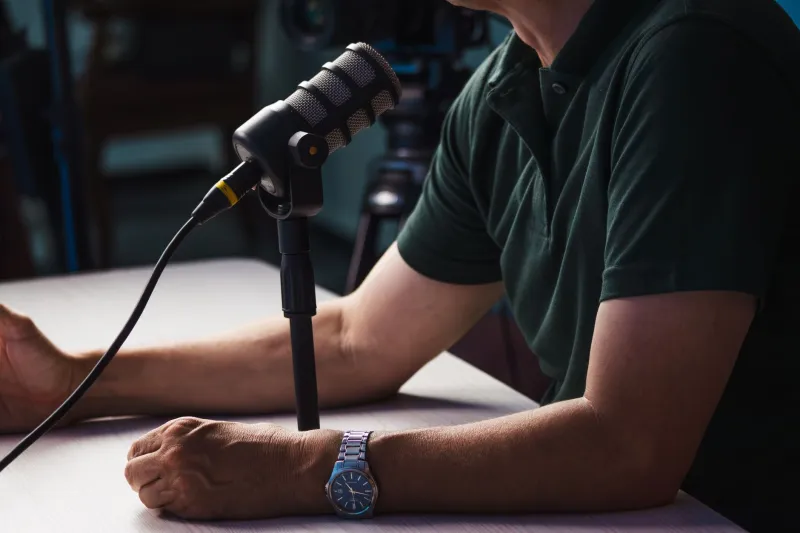
The methodology is deceptively simple: sit down with someone whose experience has been excluded from written history, turn on a recorder, and ask them to talk. But the implications of that act—and the archival infrastructure required to preserve and disseminate what results—are anything but simple. Across the United States, projects rooted in communities rather than institutions are building oral history collections that challenge the very definition of what counts as a historical document.
The Archive as an Act of Exclusion
To understand why oral history projects have become so urgent, it helps to understand what traditional archives were designed to do. For most of American history, archival practice prioritized documents produced by government agencies, educational institutions, and prominent individuals. The criteria for preservation were rarely made explicit, but their effects were consistent: the records of the powerful survived, while those of the marginalized did not.
This was not always a passive process. In many cases, the exclusion was deliberate. State-level records of incarceration, for example, were routinely purged or sealed in ways that made individual histories impossible to reconstruct. LGBTQ+ individuals who lived through the mid-twentieth century often destroyed their own correspondence and diaries out of well-founded fear that documentary evidence of their lives could be used against them. African American communities in the South saw courthouses burned, records seized, and vital documents deliberately destroyed during and after the era of Reconstruction.
"When we talk about gaps in the archive, we have to be honest about the fact that many of those gaps were manufactured," said one archivist at a community oral history project based in Chicago. "The absence isn't accidental. It was a strategy."
Voices From Inside: Oral History and the Carceral Experience
Few populations have been more comprehensively excluded from the historical record than incarcerated individuals. Prison records, where they survive, document the administrative perspective of the institution. They describe infractions, classifications, and transfers. They do not describe what it felt like to serve a sentence, how families were affected, or what conditions were actually like inside a facility in a given era.
Projects like the Oral History in the Liberal Arts initiative and several state university programs have begun addressing that absence by conducting recorded interviews with formerly incarcerated individuals, capturing accounts of life inside American prisons and jails across multiple decades. The resulting collections are preserved as both audio recordings and transcripts, with interviewees retaining meaningful input over how their accounts may be used.
What these collections reveal is frequently at odds with the institutional record. Accounts of solitary confinement practices, medical neglect, and informal systems of coercion describe conditions that official reports either minimized or omitted entirely. Cross-referenced against the limited written records that do exist, oral testimony has allowed researchers to establish timelines, identify patterns, and in some cases corroborate claims that had previously been dismissed as anecdotal.
Documenting Lives That Learned to Leave No Trace
The challenge of preserving LGBTQ+ history is distinct in a way that makes oral history particularly indispensable. Because so many individuals in earlier generations actively concealed their identities—or were forced to do so by law and social pressure—the written record is structurally incomplete in ways that cannot be remedied by simply digitizing more documents. The documents were never created, or were destroyed by the people who created them.
The GLBT Historical Society in San Francisco, one of the oldest and largest archives of its kind in the United States, has built a substantial oral history collection that captures testimony from individuals who lived through the Lavender Scare, the AIDS crisis, and the decades of criminalization that preceded the partial legal reforms of the late twentieth century. Similar collections have been developed by community organizations in New York, Chicago, and smaller cities across the country.
What emerges from these recordings is not only personal testimony but a form of social cartography—a map of the informal networks, coded languages, and community institutions that LGBTQ+ Americans built in the absence of legal recognition. Bars, rooming houses, community organizations, and friendship networks that left almost no trace in official records are described in detail by people who lived within them.
"Written history tends to document what was visible," said one oral historian who has spent more than a decade conducting interviews for a Midwest-based LGBTQ+ archive. "But a lot of the most important history happened precisely because it was invisible. Oral history is sometimes the only way to see it."
Technical and Ethical Dimensions of Community Archiving
The growth of community oral history projects has been enabled in part by the dramatic reduction in the cost of high-quality audio recording equipment and the development of accessible digital storage and distribution platforms. What once required institutional resources is now achievable with a modest budget and a committed group of volunteers.
But the technical accessibility of oral history work has also raised complex ethical questions that community archivists are navigating in real time. Who owns a recorded account? How should interviews be stored, and who should have access to them? What happens when a narrator's account implicates living individuals or describes events that could have legal consequences?
Different projects have arrived at different answers. Some collections are fully open-access, with narrators' consent, while others maintain restricted access tiers that limit certain material to researchers who agree to specific use conditions. Many projects have adopted practices drawn from Indigenous data sovereignty frameworks, which prioritize community control over how historical accounts are preserved and shared.
When Sound Becomes the Source
For historians trained in the analysis of written documents, incorporating audio testimony into scholarly practice requires a genuine methodological shift. A voice carries information that a transcript cannot fully capture: hesitation, emphasis, emotion, the particular rhythm of a speaker's relationship to their own memory. These qualities are not merely affective; they are analytically significant.
At the same time, oral history practitioners are clear-eyed about the limitations of their medium. Memory is reconstructive, not photographic. Accounts given decades after the fact are shaped by everything that has happened in the intervening years. A good oral historian does not treat recorded testimony as unmediated fact but as a particular kind of evidence—subjective, situated, and immensely valuable precisely because of those qualities.
The goal, ultimately, is not to replace the written archive but to build something alongside it: a record that is capacious enough to include the people and experiences that official history spent generations refusing to acknowledge. In a country still reckoning with the distances between its stated ideals and its actual past, that project is not merely academic. It is a form of historical repair.