Numbers That Never Lied: Mining 150 Years of American Business Ledgers to Expose the Hidden Economy of Labor and Inequality
For more than a century, the official story of American capitalism was written in boardroom minutes and executive biographies. But a growing movement of economic historians is turning instead to the dusty payroll books and account ledgers that businesses actually kept—and finding that the numbers tell a radically different story about who built this country and how little they were paid for doing it.
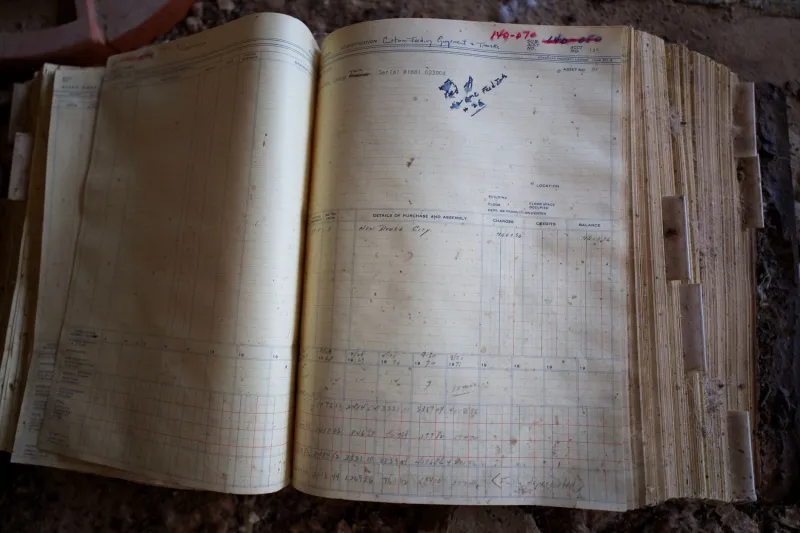
Ledgers do not editorialize. A column of figures entered by a mill bookkeeper in 1887 does not soften the wage gap between a male loom operator and the woman working beside him. A payroll register from a Pittsburgh steel supplier in 1919 does not explain away the systematic underpayment of Eastern European immigrant laborers. These documents simply record what happened, and that unflinching quality is precisely what makes them so valuable to researchers determined to reconstruct economic histories that official narratives spent decades obscuring.
What Gets Counted—and What Gets Hidden
The challenge of working with business records from the nineteenth and early twentieth centuries is not simply one of access, though access remains a significant obstacle. It is also a challenge of interpretation. Ledgers were designed to serve their owners, not posterity. Categories were created to satisfy internal accounting needs, not to illuminate social conditions. A woman listed as "piece worker" in an 1890s textile ledger may have worked full-time hours under conditions indistinguishable from those of her male colleagues, yet her compensation column tells a story that no contemporary corporate report acknowledged.
Researchers at institutions including the Harvard Business School's Baker Library and the Smithsonian's National Museum of American History have spent recent years digitizing thousands of such documents, creating searchable databases that allow historians to aggregate data across industries, regions, and decades. The results are frequently startling.
A 2021 project examining digitized payroll records from New England textile mills between 1840 and 1920 found that women performing identical tasks to men were compensated at rates averaging 47 to 58 percent of male wages—a disparity that persisted even as women came to constitute the majority of the workforce in many facilities. What makes this finding particularly significant is that it contradicts the claims made in company-commissioned histories published during the same era, which routinely described wages as determined by skill and output alone.
The Immigrant Ledger: A Record of Systematic Exclusion
If women's labor was undervalued and underreported, immigrant labor was frequently rendered all but invisible in official accounts. Yet the ledgers themselves are less cooperative with that erasure.
At the University of Minnesota's Immigration History Research Center, archivists have been cross-referencing business payroll records with naturalization documents and census data to reconstruct the working lives of immigrant laborers in the Midwest's meatpacking and mining industries between 1900 and 1940. What emerges is a portrait of deliberate wage stratification organized along ethnic lines.
In ledgers from a South St. Paul meatpacking operation, researchers identified a consistent pattern: workers with surnames suggesting Polish, Slovak, or Croatian origin were assigned to the lowest-paid classifications regardless of their actual tenure or demonstrated skill. Meanwhile, workers of Northern European background were promoted through pay grades at measurably faster rates. The ledgers did not record ethnicity directly—but the surnames did, and the pattern they reveal is unambiguous.
"These weren't accidental disparities," said one economic historian familiar with the project. "The ledger data shows that the stratification was systematic and sustained across decades. It was policy, even if it was never written down as policy anywhere an executive might later be held accountable for it."
When the Books Contradict the Biography
Some of the most consequential discoveries emerging from ledger research involve direct contradictions between what businesses claimed publicly and what their own internal records reveal.
Consider the case of a prominent Midwestern department store chain whose founder was celebrated in a 1940s corporate history as a progressive employer who had pioneered equal pay practices decades before such ideas became fashionable. The company's own payroll ledgers, now held at a state historical society and partially digitized, tell a different story. Female sales clerks were consistently classified under job codes that carried lower base wages than the codes assigned to male clerks performing equivalent work. Bonuses and commission structures further widened the gap in ways that the flat wage figures alone would not have revealed.
This gap between corporate mythology and ledger reality is not unusual. Researchers working with records from the tobacco industry in the American South have documented similar contradictions, finding that companies that publicly championed their role as community employers maintained internal pay schedules that enforced racial wage hierarchies well into the mid-twentieth century.
The Digitization Imperative
The ability to identify these patterns at scale depends almost entirely on digitization. A single ledger, read in isolation, might yield intriguing data points but little in the way of conclusive findings. It is only when hundreds or thousands of records can be searched, sorted, and compared that the structural dimensions of historical inequality become visible.
Organizations including the Digital Public Library of America and state-level archival networks have accelerated their business records digitization programs in recent years, partly in response to growing scholarly demand. Volunteer transcription projects, modeled on successful crowdsourcing efforts in genealogical research, have helped expand the volume of searchable material considerably.
Yet significant gaps remain. Records from small and medium-sized businesses—precisely the enterprises where many immigrant and female workers were employed—survive in far smaller numbers than those of major corporations, and their digitization has proceeded unevenly. Rural business records, records from industries dominated by African American labor in the South, and documents from businesses owned by communities of color are particularly underrepresented in existing digital collections.
Reading the Silence as Evidence
Archivists working in this space have come to treat the absence of records as evidence in its own right. When an industry employed large numbers of women or immigrants but produced payroll records that account for only a fraction of the documented workforce, that discrepancy is itself a finding. It suggests that certain categories of labor were deliberately kept off the formal books—a practice that benefited employers in multiple ways, obscuring both the true scale of underpayment and the legal obligations that accompanied formal employment.
The silent ledger, in other words, is not simply a gap in the historical record. It is a document of its own kind, one that researchers are learning to read with increasing sophistication.
As digitization efforts continue and analytical tools grow more powerful, the economic history encoded in American business records is slowly being recovered—not as a tidy narrative of progress and prosperity, but as something considerably more complicated, and considerably more honest.