Voices Buried in the Stacks: How Communities Are Recovering the Histories That Official Archives Left Behind
American history, as it has traditionally been taught and archived, has never been a complete picture. It has been a curated one. For centuries, the institutions responsible for preserving the past — government repositories, university libraries, church record rooms, and municipal archives — operated under social and political frameworks that systematically excluded the experiences of Black Americans, Indigenous nations, immigrant communities, and women. The result is not merely an incomplete record. It is, in many cases, a distorted one.
What is increasingly clear, however, is that silence in an archive is not the same as absence from history. Across the United States, a quiet but determined movement is underway to locate, digitize, and interpret the records that dominant institutions overlooked — and, where no records exist, to build new ones from the ground up.
The Architecture of Omission
To understand why so many communities are absent from official archives, it helps to understand how those archives were constructed in the first place. Archival collection decisions have never been politically neutral. Well into the twentieth century, the personal papers of white male politicians, businessmen, and clergy were considered inherently worthy of preservation. The daily correspondence of a sharecropper, the oral traditions of an Ojibwe community, or the organizational records of a Chinese mutual aid society in San Francisco were not.
In some cases, the omission was passive — the result of institutional indifference. In others, it was active. The systematic destruction of Native American cultural materials during the era of federal assimilation policies represents one of the most deliberate archival erasures in the nation's history. Federal boarding school records, when they survive at all, frequently document administrative logistics while stripping students of their names, languages, and identities. What remains tells the story of the institution, not the child.
For Black Americans, the fragmentation of the historical record has multiple origins. The legal prohibition against literacy for enslaved people meant that personal documentation was itself an act of resistance. After emancipation, many Freedmen's Bureau records — among the most valuable repositories of African American family history from the Reconstruction era — were damaged, scattered, or left to deteriorate in inadequate storage conditions for decades before scholars began the work of systematic preservation.
Grassroots Recovery in Practice
The response to these gaps has not waited for institutional leadership. Some of the most consequential archival recovery work of the past two decades has originated not in universities or government agencies, but in community organizations with deep ties to the histories they are working to recover.
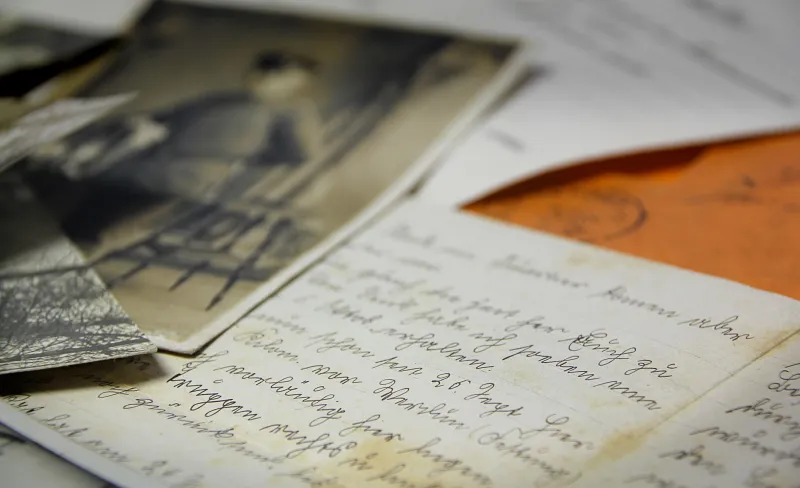
The Freedmen's Bureau Records Transcription Project, a large-scale crowdsourced initiative that has engaged thousands of volunteers in digitizing and indexing handwritten Reconstruction-era documents, has transformed access to records that were previously accessible only to researchers willing to travel to physical repositories. For many African American families, these documents represent the earliest surviving paper trail of their ancestors' lives as free people — recording marriages, labor contracts, and accounts of violence that would otherwise exist only in oral tradition.
Among Indigenous communities, the movement to reclaim archival authority has taken on additional dimensions of sovereignty. Tribal nations including the Mashantucket Pequot in Connecticut and the Confederated Salish and Kootenai Tribes in Montana have developed their own cultural archives and digital repositories, asserting the right to control how their histories are documented and accessed. These institutions operate under protocols that reflect Indigenous values around knowledge-sharing — a deliberate departure from the open-access model that governs most public archives.
Immigrant community archives have similarly proliferated in recent years. The South Asian American Digital Archive, founded in Philadelphia, has collected thousands of oral histories, personal photographs, and organizational records that document the experiences of South Asian communities in the United States from the early twentieth century onward. Its founders have been explicit about the political dimension of their work: in the absence of institutional interest, community members must become their own archivists.
The Academic Turn Toward Community Partnership
Within the academy, a growing number of historians and archivists are rethinking their discipline's relationship to the communities whose histories they study. The concept of "community archives" — repositories created and governed by the communities themselves, rather than by external institutions — has gained significant traction as both a practical methodology and an ethical framework.
Projects emerging from this approach tend to look quite different from traditional archival initiatives. They frequently center oral history as a primary source, recognizing that for many communities, spoken testimony carries the same evidentiary weight that a written document holds in conventional historical practice. They involve community members not merely as subjects of research but as co-investigators, interpreters, and decision-makers.
The Densho Digital Repository, which focuses on the history of Japanese American incarceration during World War II, exemplifies this collaborative model. Built in partnership with survivors and their descendants, the archive combines government documents, personal photographs, and video oral histories in ways that allow the incarcerated community's perspective to shape the interpretive framework — rather than being filtered through the lens of the administrative record.
Challenging the Curriculum
The implications of this archival recovery work extend well beyond the research library. As previously buried records become accessible, they are beginning to reshape what is taught in American schools — and to challenge narratives that have been presented as settled history.
The rediscovery and digitization of records relating to the 1921 Tulsa Race Massacre offers a compelling example. For decades, the event was absent from most textbooks and largely unknown outside Oklahoma. The painstaking work of local historians, archivists, and journalists to locate surviving documents, photographs, and testimony has not only restored the event to public memory but has also forced a reckoning with the mechanisms by which such erasures occur and persist.
Similar processes are underway in communities across the country — from the recovery of records documenting anti-Chinese violence in the nineteenth-century American West, to the ongoing effort to document the full scope of the Indian boarding school system. Each project represents not merely an addition to the historical record, but a revision of it.
The Work That Remains
The scale of what has been lost, suppressed, or neglected in American archives is impossible to quantify precisely. What is certain is that the recovery effort, however significant its achievements, remains incomplete. Funding is chronically scarce. Digitization is resource-intensive. And some materials — those that were destroyed, never created, or exist only in the living memory of aging community members — cannot be recovered at all.
What the current generation of community archivists and scholars has demonstrated, however, is that the historical record is neither fixed nor finished. It is, like all human constructions, subject to revision, expansion, and reinterpretation. The question of whose past is preserved — and by whom, and on whose terms — is ultimately a question about whose present and future are valued.
For Project Past, the work of these archival recovery initiatives is a reminder that history is not simply something that happened. It is something that is continually made, unmade, and remade through the records we choose to keep, the voices we choose to amplify, and the silences we choose to break.