Erased by Design: How Federal Housing Maps Turned Black Neighborhoods Into Historical Blank Spaces
In the archives of mid-twentieth-century American urban planning, absence is not neutral. When researchers pull open the drawers of postwar Federal Housing Administration files, they frequently encounter something more revealing than the documents themselves: the systematic omission of entire communities from the official cartographic and administrative record. These gaps, once dismissed as bureaucratic oversight, are now understood by historians and archivists as something far more deliberate—a calculated effort to render Black neighborhoods invisible within the formal apparatus of American civic life.
The story of redlining has entered mainstream historical consciousness in recent decades, largely through the work of scholars who digitized the notorious color-coded maps produced by the Home Owners' Loan Corporation beginning in the 1930s. Those maps—grading neighborhoods from green to red based on perceived investment risk—have become emblematic of structural racism in American housing. Yet an emerging body of archival research suggests that the maps themselves were only the most visible instrument in a far broader project of administrative erasure.
What the Appraisal Files Actually Said
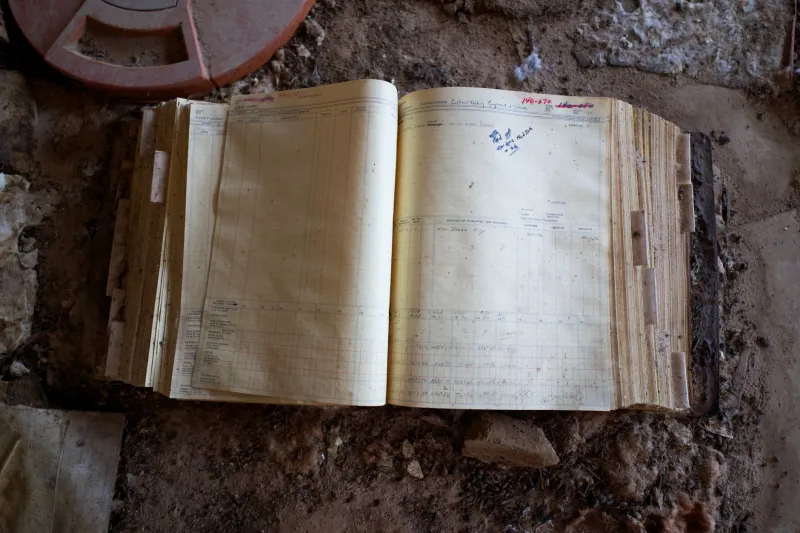
FHA appraisal records from the late 1940s and throughout the 1950s are among the most instructive documents available to researchers examining this period. Declassified files held at the National Archives in College Park, Maryland, and at regional depositories across the country contain property assessments that make the racial logic of postwar housing policy explicit in language that is, by turns, bureaucratic and strikingly candid.
Appraisers were instructed to evaluate not only the physical condition of a property but the racial composition of its surrounding neighborhood. Phrases such as "infiltration of inharmonious racial groups" appear with striking regularity in assessment forms that were meant to guide mortgage lending decisions. Neighborhoods with significant Black populations were systematically assigned the lowest ratings, regardless of the structural quality of the housing stock or the economic stability of the residents within them.
What makes these documents particularly significant from an archival standpoint is not merely what they say, but what they were designed to produce: a paper trail that legitimized exclusion while obscuring its racial foundations beneath the language of financial prudence. The appraisal form, with its columns of figures and standardized checkboxes, lent an air of bureaucratic objectivity to decisions that were, at their core, exercises in racial governance.
The Zoning Board and the Disappeared Block
Beyond the FHA files, local zoning records from municipalities across the suburban North and South offer a complementary dimension of this story. Researchers cross-referencing county planning commission minutes with census enumeration data from the same period have identified a pattern that is difficult to attribute to coincidence: Black residential clusters that appear clearly in census records frequently go unacknowledged—or are misclassified—in the zoning and land-use documents produced by local planning boards during the same years.
In several documented cases from suburban Ohio, Michigan, and New Jersey, neighborhoods with established Black populations were zoned for industrial or commercial use in planning documents, effectively denying their residential character and, by extension, the legitimacy of the community itself. When highway construction or urban renewal projects subsequently displaced these same communities in the 1950s and 1960s, there was often no official residential designation to contest, no neighborhood boundary to defend. The planning record had, in a very practical sense, already erased the community before the bulldozers arrived.
Real estate agents' correspondence, where it survives in local historical society collections and corporate archives, adds a granular layer to this picture. Letters between agents and developers from the early postwar years document explicit agreements to steer Black buyers away from newly constructed suburban subdivisions, and to maintain what the correspondence sometimes called "neighborhood character." These letters, exchanged between private parties but operating in full alignment with federal policy, illuminate the degree to which erasure was not incidental to the postwar housing boom—it was a foundational condition of it.
When the Archive Itself Becomes Evidence
For archivists and historians working in this field, one of the most methodologically significant insights of recent scholarship is the evidentiary value of absence. The deliberate exclusion of Black communities from official records is not simply a gap that impedes research; it is itself a form of historical documentation. When a neighborhood of several hundred Black families fails to appear in a municipal planning survey, when an entire street vanishes between one decade's city directory and the next, the omission carries meaning.
This approach—treating archival silence as a form of evidence rather than a limitation—has allowed researchers to reconstruct the contours of communities that were actively written out of the official record. By triangulating between census microdata, church records, Black newspapers such as the Chicago Defender and the Pittsburgh Courier, and the occasional survival of private correspondence or organizational minutes, historians have begun to restore a measure of documentary visibility to communities that were denied it by design.
Digital tools have accelerated this work considerably. Geographic information systems now allow researchers to overlay HOLC maps with census tract data, property tax records, and deed restriction filings, producing composite images of neighborhood change that make the spatial logic of exclusion visible in ways that individual documents cannot. Projects housed at universities including the University of Richmond and the University of Minnesota have made significant portions of this data publicly accessible, enabling community members to engage directly with the archival record of their own neighborhoods' histories.
The Ledger of Lost Wealth
The consequences of these policies extend well beyond the historical period in which they operated. Economists studying intergenerational wealth transmission have documented the degree to which homeownership in the postwar decades served as the primary vehicle through which American families—predominantly white ones—accumulated the equity that funded college educations, small business ventures, and retirement security across subsequent generations. Black families, systematically excluded from that vehicle by the policies documented in FHA files and zoning records, were denied not only housing but the compounding financial advantages that housing represented.
Archival research, in this context, is not merely an exercise in historical recovery. The records that researchers are working to locate, preserve, and interpret carry direct implications for contemporary conversations about reparative policy, municipal redress, and the legal frameworks through which historical harm might be acknowledged and addressed. Several cities, including Evanston, Illinois, have begun drawing on precisely this kind of historical documentation to substantiate reparations programs tied specifically to redlining-era exclusion.
Recovering What Was Taken
The project of reconstructing what was erased is, by its nature, incomplete. Some records were never created. Others were destroyed, whether through institutional neglect or something more purposeful. What survives is fragmentary, distributed across dozens of repositories, and often accessible only to researchers with the institutional affiliations and archival expertise to navigate complex finding aids and access restrictions.
Efforts to digitize and centralize these holdings are ongoing, though underfunded relative to the scale of the task. Community archivists, genealogists, and local historians continue to surface documents—deeds, letters, photographs, organizational records—that complicate and enrich the official account. Each recovered item represents not only a piece of historical evidence but a small act of resistance against the erasure that was, for a generation of Black Americans, federal policy.
The silence of the suburbs, it turns out, was never empty. It was constructed, maintained, and enforced. And it is, slowly, being made to speak.